Radiation, Contamination, and Standoff Distance: How Containerized Drone Systems Enable CBRN Reconnaissance Without Putting Operators at Risk
 D. Marsh
Radiation, Contamination, and Standoff Distance: How Containerized Drone Systems Enable CBRN Reconnaissance Without Putting Operators at Risk
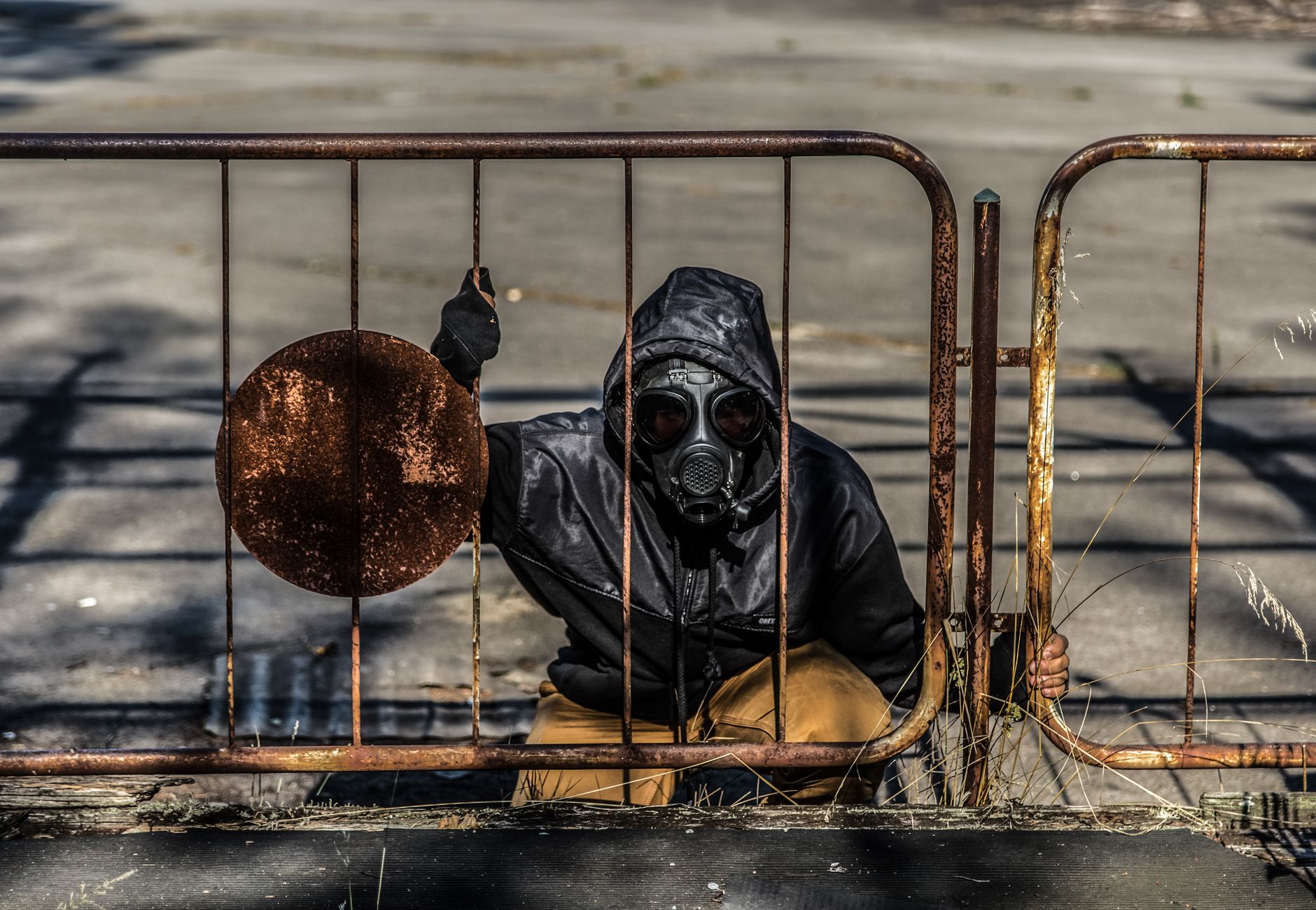 Photo by Wendelin Jacober on Pexels.
Sending a person into a chemically or radiologically contaminated zone is a last resort. Every commander knows this. Yet the operational demand for accurate contamination mapping, plume tracking, and hot-zone boundary identification does not pause while the logistics of protective equipment, decontamination corridors, and casualty evacuation get sorted out.
Containerized drone systems solve this problem in a way that fly-away kits and manually operated platforms cannot: they keep the human being physically and operationally separated from the hazard, from the moment of deployment through the return of contaminated airframes.
Why Standoff Distance Is the Entire Argument
In CBRN operations, distance is protection. Every meter between an operator and a radiological source reduces absorbed dose. Every second shaved off a human's exposure window in a chemical plume matters clinically.
Conventional drone-in-a-box approaches that require a technician to physically handle the platform before or after flight collapse that protection the moment they need it most. A pilot sitting at an GCS 500 meters from the hot zone, manually launching a drone they just assembled, has already accepted unnecessary exposure. Containerized autonomous systems cut that link entirely.
The container serves as the launch site, the recovery bay, the charging station, and the hardware barrier between contaminated airframes and human hands. Post-mission, a drone that flew through a chlorine plume lands back inside a sealed enclosure. Decontamination, if required, happens on the container, not on a person.
Payload Configuration for CBRN Sensing
The sensor stack matters enormously here. Containerized platforms deployed for CBRN reconnaissance typically carry some combination of the following:
- Gamma radiation detectors (sodium iodide or silicon PIN diode sensors for dose rate mapping)
- Photoionization detectors (PIDs) for volatile organic compounds and chemical agent surrogates
- Electrochemical sensors tuned to specific agents: chlorine, hydrogen cyanide, sarin surrogates
- Multispectral or hyperspectral imagers that can detect surface contamination signatures
- Meteorological sensors feeding real-time wind speed and direction into plume dispersion models
Swappable payload bays make this practical. A container configured for persistent surveillance can be reconfigured for CBRN reconnaissance by a two-person team in under thirty minutes if the bay interfaces are standardized. That flexibility matters when the nature of a threat changes before the mission brief is even finished.
The Autonomy Requirement
Manual piloting inside a contaminated zone introduces latency that degrades the mission. An operator wearing Level B protective equipment has reduced dexterity, limited situational awareness, and a finite work window before heat stress or air supply becomes a factor.
Autonomous survey patterns remove those variables. A containerized system pre-programmed with a grid survey or spiral search profile can execute a contamination mapping run, return readings to the onboard edge processor, and produce a georeferenced contamination map without a single manual input after launch authorization. The operator authorizes the mission from a safe position and monitors the output.
Below is a simplified mission flow for a CBRN autonomous survey:
graph TD
    A[Threat Reported] --> B(Container Deploys to Standoff Position)
    B --> C{Operator Authorizes Launch}
    C --> D[Autonomous Grid Survey Begins]
    D --> E[Sensor Data Logged and Transmitted]
    E --> F(Contamination Map Generated at Edge)
    F --> G[Platform Returns to Container]
    G --> H{Airframe Contaminated?}
    H -->|Yes| I[Container Sealed, Decon Protocol Initiated]
    H -->|No| J[Standard Recovery and Recharge]
Container Placement and Terrain Considerations
Standoff distance only works if the container itself can be positioned at a tactically useful remove from the hazard. That means rough terrain capability matters. A containerized system that requires a prepared pad or level surface cannot be pushed forward on a fire road to the edge of a radiological exclusion zone.
Systems mounted on wheeled or tracked prime movers, or designed to be sling-loaded to a forward position, preserve the standoff geometry. The ISO footprint provides predictable handling characteristics for whatever vehicle is doing the positioning.
The Decontamination Problem Is Not Solved, But It Is Contained
No containerized system eliminates the decontamination requirement for airframes that flew through a hot zone. What it does is localize that problem. One sealed container with a contaminated drone inside is a manageable hazard. A team of technicians handling a contaminated airframe in an open field is not.
Some systems are now incorporating internal HEPA filtration and UV-C decontamination cycles that begin automatically after recovery. Those capabilities are still maturing, but the trajectory of development points toward containers that handle first-stage decontamination before a human hand ever touches the platform.
For CBRN reconnaissance, the value of containerized autonomy is simple to state: the mission gets done, and the people who launched it walk away without a dosimetry concern.
Get Drone in a Package in your inbox
New posts delivered directly. No spam.
No spam. Unsubscribe anytime.