Jungle and Rainforest Operations: How Containerized Drone Systems Cut Through the Canopy Problem
 D. Marsh
Jungle environments kill equipment and careers. Humidity corrodes contacts, canopy blocks GPS signals, and resupply routes turn into liabilities the moment a vehicle gets stuck in mud that looks like solid ground. Most drone programs treat these conditions as edge cases. They are not.
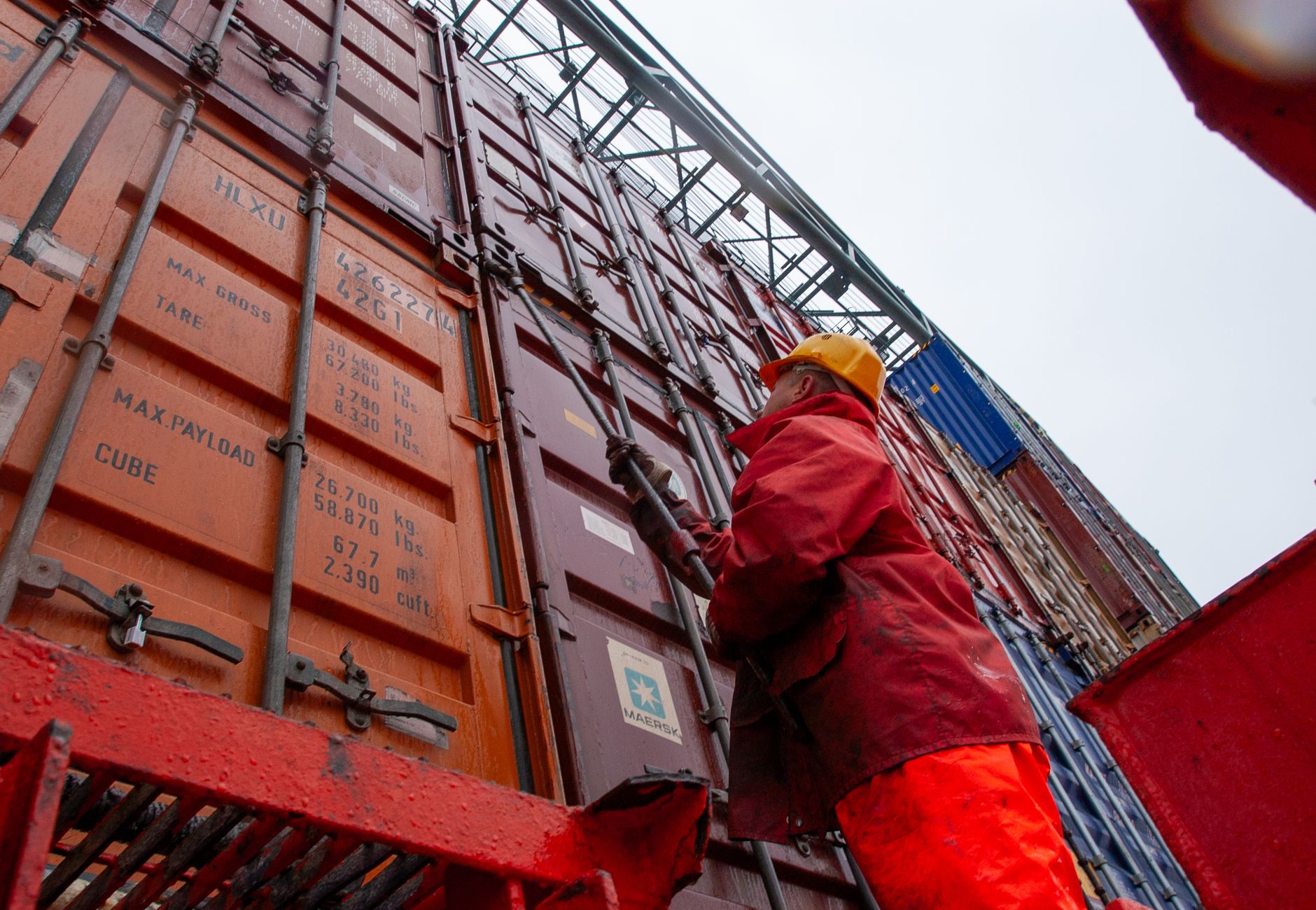 Photo by Simon R. Minshall on Pexels.
Southeast Asia, Central Africa, the Amazon basin: these are exactly the places where persistent ISR and autonomous logistics matter most, and exactly the places where conventional fly-away drone kits fail fastest.
Containerized systems were designed for this.
The Canopy Problem Is Three Problems
Operators tend to talk about jungle deployments as a single challenge. In practice, it breaks into three distinct failure modes that compound each other.
First: GPS degradation under dense canopy is severe, not marginal. Multi-layer rainforest canopy can attenuate satellite signal enough to make standard GNSS-dependent navigation unreliable for hover-stable platforms operating below the treeline. A drone that depends entirely on GPS for position hold becomes a liability the moment it drops beneath the upper canopy.
Second: humidity and condensation. Not ambient humidity in the abstract, but the specific problem of thermal cycling. A container that heats up during daylight operations and cools rapidly after sunset generates condensation inside electronics bays. Uncertified enclosures let that moisture accumulate. Over weeks of continuous deployment, it destroys connectors, fouls sensor optics, and degrades battery chemistry faster than any combat stress would.
Third: the landing zone question. Jungle terrain offers almost no flat, clear space at the operational level. A fixed-wing platform needing a runway is simply not in the conversation. Even many VTOL platforms require a clearing large enough to be a liability: a visible gap in canopy readable on satellite imagery, a position that announces your presence.
What Containerized Systems Actually Do Differently
A properly hardened container provides a controlled internal environment regardless of external conditions. Positive pressure systems, combined with military-grade ingress protection (IP67 and above on critical subsystems), keep moisture out during the thermal cycling that causes condensation-driven failures. This sounds like routine ruggedization. It is not. Most commercial drone systems are rated for operational humidity, not for long-duration storage and repeated thermal shock in a tropical environment.
The GPS problem gets solved at the navigation layer. Containerized ISR platforms deployed in jungle-capable configurations typically fuse visual odometry, terrain-referenced navigation, and LiDAR-based obstacle avoidance. The container's onboard edge compute handles sensor fusion locally; no datalink required to maintain position. When the drone flies beneath the canopy for low-altitude ISR passes, it navigates on local reference, not satellite.
For launch and recovery, the vertical profile matters enormously. A containerized VTOL system with a small footprint can launch from a cleared container pad, climb vertically through canopy gaps, and conduct ISR or relay operations above the treeline where GPS and comms are fully restored. Recovery reverses the process. The container itself serves as the designated landing point, with optical or RF-based precision return handling the final meters of descent.
graph TD
    A[Container Pad: Launch] --> B(Vertical Ascent Through Canopy Gap)
    B --> C{Above Canopy: GPS and Comms Restored}
    C --> D[ISR or Relay Operations]
    D --> E(Descent: RF/Optical Precision Approach)
    E --> F[Container Recovery and Recharge]
    F --> A
Logistics Without Roads
Jungle resupply is where containerized systems earn their keep beyond ISR. A standard ISO container can be moved by helicopter sling load, river barge, or tracked vehicle. Once it arrives, it operates. No assembly, no site preparation, no specialist crew required to stand up the system.
Compare that to a conventional drone program forward-deployed in the same environment: cases of spare parts, a generator, calibration equipment, and at minimum one trained technician who cannot be doing anything else. Every one of those elements is a point of failure.
The containerized approach compresses that entire support tail into a single deployable unit. Batteries recharge from the container's integrated power system. Maintenance access is designed for field conditions, meaning panels that can be opened without a clean room and components swappable with gloves on.
In a jungle operating environment, that is not a convenience. It determines whether a mission sustains past day three.
Why This Matters Now
Conflict geography is not trending toward open desert. Contested areas in the Pacific, in Central and West Africa, and across Southeast Asia share one common feature: dense vegetation, limited infrastructure, and environments that punish logistics-heavy force packages.
Containerized autonomous systems were not designed for the easy cases. Persistent, low-footprint ISR in the hardest terrain on earth is exactly what this form factor exists to solve.
Get Drone in a Package in your inbox
New posts delivered directly. No spam.
No spam. Unsubscribe anytime.