Silent Watch: How Containerized Drone Systems Enable Persistent Surveillance Without a Permanent Footprint
 D. Marsh
Persistent surveillance is one of the oldest problems in military operations, and one of the most expensive to solve badly. Traditional answers involve fixed towers, manned aircraft on rotation, or Forward Operating Bases with enough infrastructure to show up clearly on satellite imagery. None of those options travel light.
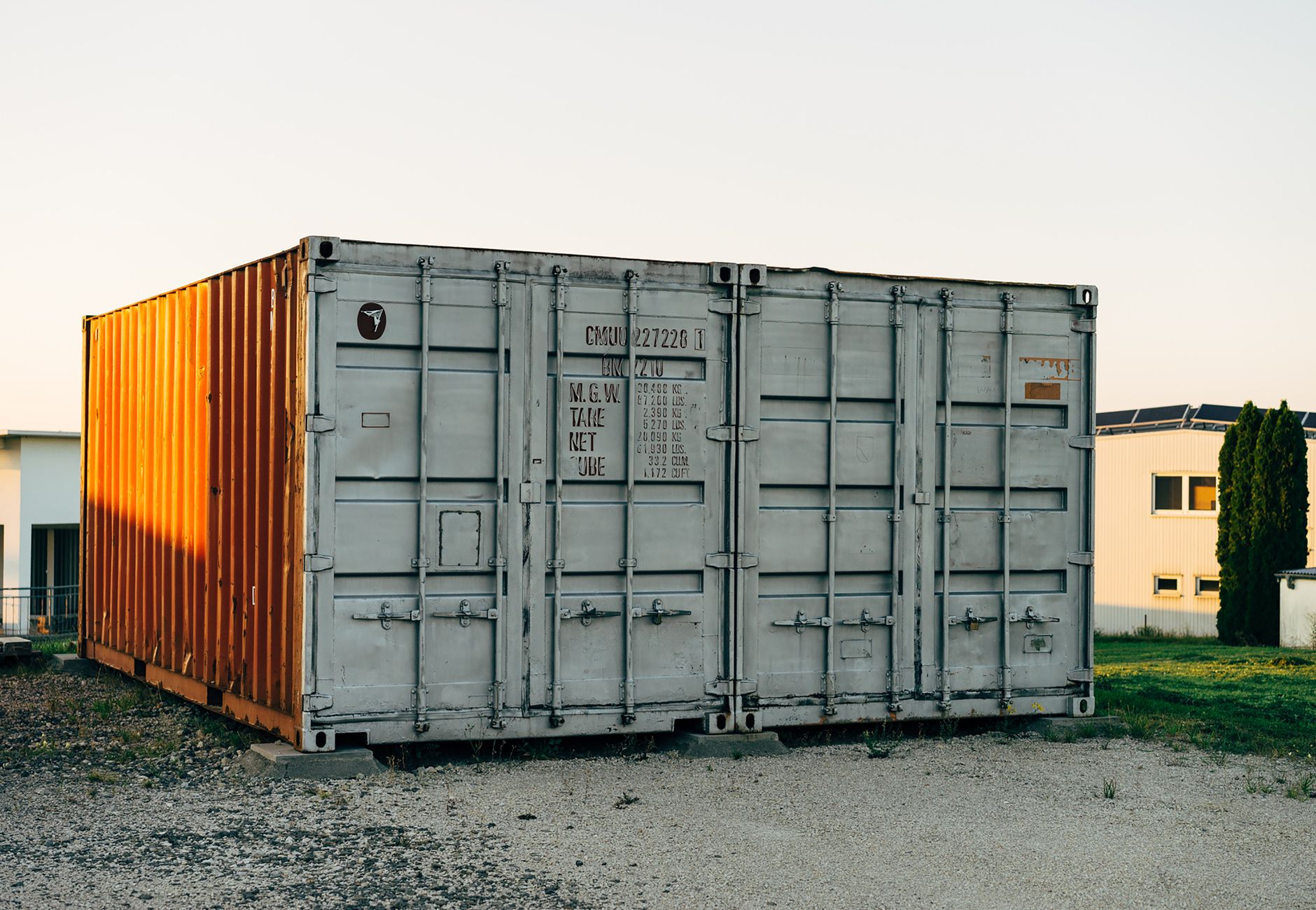 Photo by Markus Winkler on Pexels.
A containerized drone system changes the math entirely.
Ship a 20-foot ISO container to a forward position, and you've shipped a self-contained ISR node. No permanent construction. No dedicated airstrip. No crew of twelve to sustain the operation. The container handles climate control, recharging, communications relay, and automated launch-and-recovery, the drone goes up on schedule or on trigger, collects, returns, and gets itself ready for the next sortie.
That last part matters more than most procurement discussions acknowledge. Availability, not peak performance, determines whether a surveillance asset is actually useful. A drone that lands and sits grounded for six hours while a technician swaps batteries and runs diagnostics is a drone that missed the window. Automated recovery and rapid-cycle recharging inside a sealed enclosure means sorties measured in minutes apart, not hours.
What "Persistent" Actually Requires
True persistence isn't continuous flight, that's a physics problem no battery chemistry has fully solved yet. Real persistence is continuous coverage, which you can achieve with cycling assets if the gaps are short enough and the handoff is clean.
A well-designed containerized system handles this through sequenced sortie scheduling: one airframe on station, one on final approach, one completing its charge cycle. Overlap by ten minutes and you've closed the gap. The container's onboard compute tracks sortie timing, battery state, and sensor tasking without waiting for a human to authorize each launch.
graph TD
    A[/Sortie 1 On Station/] --> B[Sortie 1 Returns]
    B --> C[Auto-Recovery & Recharge]
    D[/Sortie 2 Launches/] --> A
    C --> E[/Sortie 1 Ready/]
    E --> F{Gap Covered?}
    F -->|Yes| D
    F -->|No| G[Alert Operator]
The diagram above is simplified, but the point holds: the decision loop runs inside the container, not through a request queue back to a headquarters element thirty kilometers away.
The Footprint Problem, Solved by Default
Fixed surveillance infrastructure announces itself. A tower is visible. A hardened building requires permits, contracts, and construction time, and leaves something behind when you withdraw. These aren't minor operational concerns; they're force protection liabilities.
Deploy a container, and you've deployed something that looks, at a distance, like logistics. Camouflage is the wrong word for it. Ambiguity is more accurate. A containerized drone system fits the background noise of any modern operational environment because containers are everywhere, ports, depots, staging areas, forward supply points. One more box on a flatbed doesn't trigger the same signature as a 40-meter antenna mast.
When the mission ends, the container loads back onto the same truck that brought it. Nothing left behind. No remediation. No negotiation with a host nation about what happens to the concrete pad.
Where This Fits in the ISR Stack
Containerized persistent surveillance isn't a replacement for high-altitude collection or space-based assets. It occupies a specific niche that those platforms can't fill: low-altitude, high-revisit, tactically responsive ISR at the edge.
A theater-level asset can tell you a building exists. A containerized drone system parked two kilometers away can tell you how many vehicles are parked outside it, what direction they're facing, and whether that changed in the last forty minutes, without a single tasking request climbing up and back down the chain of command.
That responsiveness is what forward commanders actually need. Not imagery from six hours ago. Not a thirty-minute wait while an aircraft repositions. Data now, at the resolution that matters for the decision in front of them.
Logistics Drive Everything
The conversations about containerized drone systems tend to focus on the drones. Understandable, but slightly misplaced. The real capability is in the integration: power management, thermal regulation, automated maintenance checks, encrypted data links, and the container's ability to operate as a standalone node when the network goes intermittent.
Get those subsystems right and the drone almost doesn't matter, swap the airframe for the next generation without rebuilding anything else. Get them wrong and you've shipped a very expensive box that needs babysitting.
That's the standard worth holding suppliers to. Not peak flight performance on a calm day at sea level. Sustained, autonomous, reliable operations in conditions that field teams actually encounter: heat, dust, humidity, limited bandwidth, and no one nearby who went to the manufacturer's training course.
Persistent surveillance has always been worth having. Now it's worth deploying.
Get Drone in a Package in your inbox
New posts delivered directly. No spam.
No spam. Unsubscribe anytime.