Cold Weather Operations: How Containerized Drone Systems Solve the Arctic Deployment Problem
 D. Marsh
Nobody talks about the cold enough.
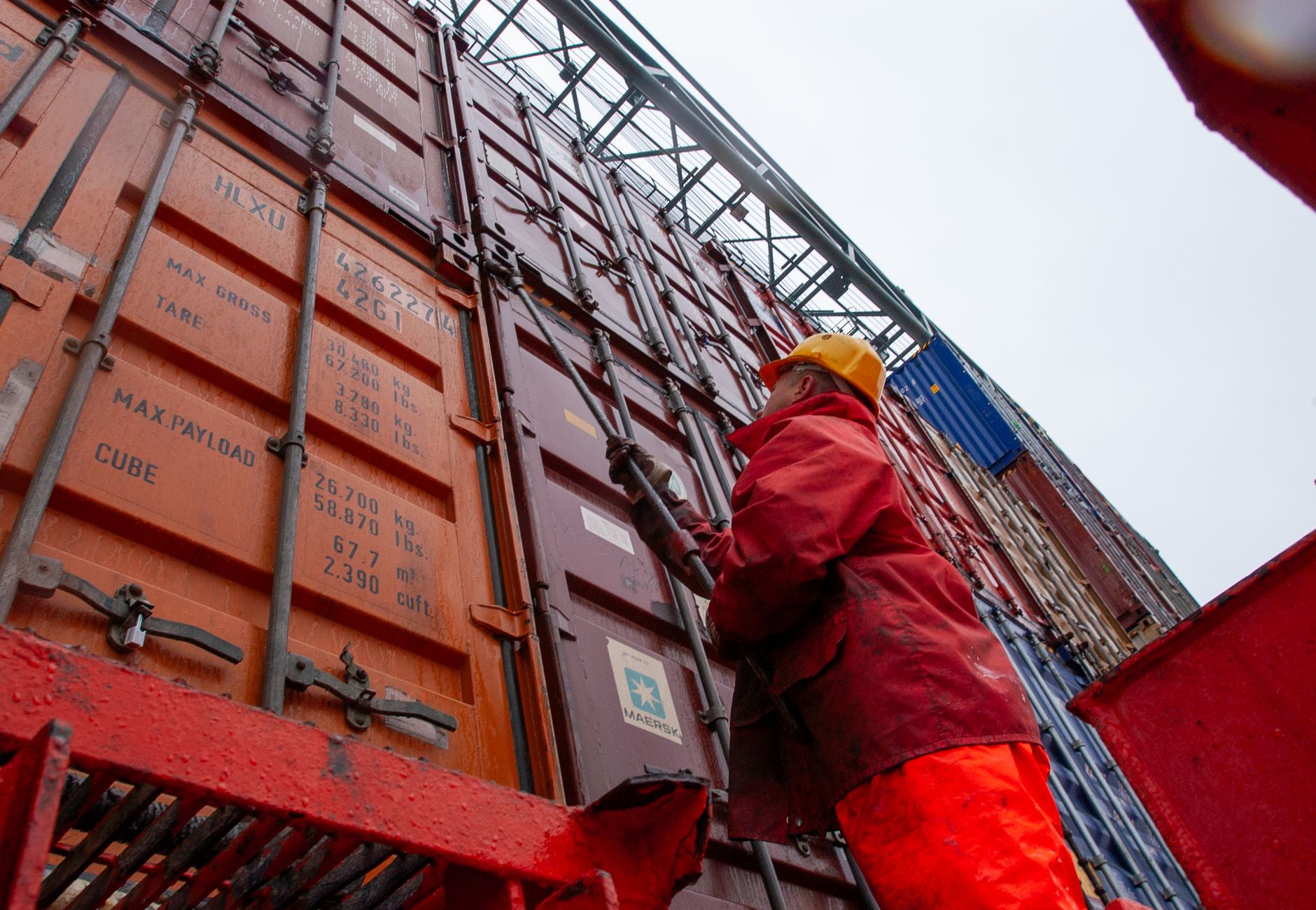 Photo by Simon R. Minshall on Pexels.
Most UAS failure analysis focuses on electronic countermeasures, GPS jamming, or command-link degradation. But ask operators who've run persistent ISR in northern Norway, Alaska, or the Baltics what actually kills drone uptime, battery discharge curves at -30°C, hydraulic fluid viscosity in rotary actuators, ice ingestion on props, condensation cycling that shorts flight controllers. The environment is the threat, and most drone programs treat it as an afterthought.
Containerized systems address this not through magic, but through a principle that military logistics figured out decades ago: controlled environments travel. The ISO container isn't just a shipping box, it's a climate-managed enclosure that brings the operating environment with the asset, rather than forcing the asset to survive whatever environment it lands in.
The Physics of Cold-Weather UAS Failure
Lithium polymer and lithium iron phosphate batteries lose a significant portion of their rated capacity below freezing. At -20°C, you're often looking at 40–60% of nominal capacity, which means a drone rated for 35 minutes of endurance is now flying 15. That's not a planning problem; it's a mission-abortion problem if you don't know it's happening.
Beyond batteries, cold affects lubricants in gimbal systems, sensor window clarity through fogging and icing, and motor efficiency as winding resistance shifts. Composite airframes become more brittle. Seals fail. None of this is insurmountable, but all of it requires either preconditioning or tolerance-built hardware. Most commercial UAS have neither.
A containerized system solves preconditioning by default. The drone lives in a thermally regulated enclosure. Before launch, the battery has been warming on a trickle cycle for hours. The airframe is at operating temperature. When the hatch opens, you're deploying a system that's ready, not one that needs a 20-minute warm-up that no one planned for.
What "Cold-Weather Ready" Actually Requires
A real cold-weather containerized deployment package typically includes:
- Active thermal management, diesel-fired or electric heating elements maintaining internal temps above 10°C regardless of ambient conditions
- Desiccant or active dehumidification to prevent condensation during thermal cycling as operators open and close the container
- Battery conditioning bays, not just storage, but managed charge/temperature cycles that keep cells at peak state of health
- Prop and airframe preheating before the drone is raised into the launch position
- Redundant sealing on the launch hatch so the interior isn't flooded with arctic air during every sortie cycle
None of these are exotic. All of them require upfront design intent, they don't happen when you retrofit a COTS drone into a metal box and call it a containerized system.
Sortie Cycle in a Cold-Weather Container
Here's what a functional cold-weather autonomous sortie cycle actually looks like:
graph TD
    A[Thermal Conditioning Active] --> B(Battery Reaches Target Temp)
    B --> C[Pre-Launch System Check]
    C --> D{Conditions Met?}
    D -- Yes --> E[/Hatch Opens, Drone Launches/]
    D -- No --> C
    E --> F(Mission Execution)
    F --> G[Return & Hatch Close]
    G --> A
The loop back to thermal conditioning is the key. Between sorties, the container isn't idle, it's resetting. By the time the drone has landed, offloaded data, and been inspected, the next battery pack is already conditioned. High-tempo operations in cold environments depend on that cycle running without manual intervention.
The Logistical Argument
There's a second-order benefit that rarely gets discussed in product sheets. Containerized systems that handle their own thermal environment dramatically simplify the forward logistics chain. You don't need a heated tent, a generator-fed warming station, or a technician babysitting battery temps overnight. One container, one power hookup, one recurring checklist.
For forward-deployed small units, reconnaissance teams, border surveillance posts, fire support coordination elements, that reduction in support burden is sometimes the difference between the capability being employable and it sitting in a warehouse waiting for conditions that never quite come together.
The hardware has gotten good enough. The integration hasn't always kept pace. Designing a containerized drone system that actually performs in cold weather means thinking about thermal engineering from day one, not bolting on heaters when the first winter test fails. That's a design philosophy, not a feature list, and it's where serious programs separate from the ones that are still debugging their first Norwegian winter.
Get Drone in a Package in your inbox
New posts delivered directly. No spam.
No spam. Unsubscribe anytime.