Power Independence in the Field: How Containerized Drone Systems Handle Energy Without the Grid
 D. Marsh
Every deployment plan looks clean until someone asks where the power comes from.
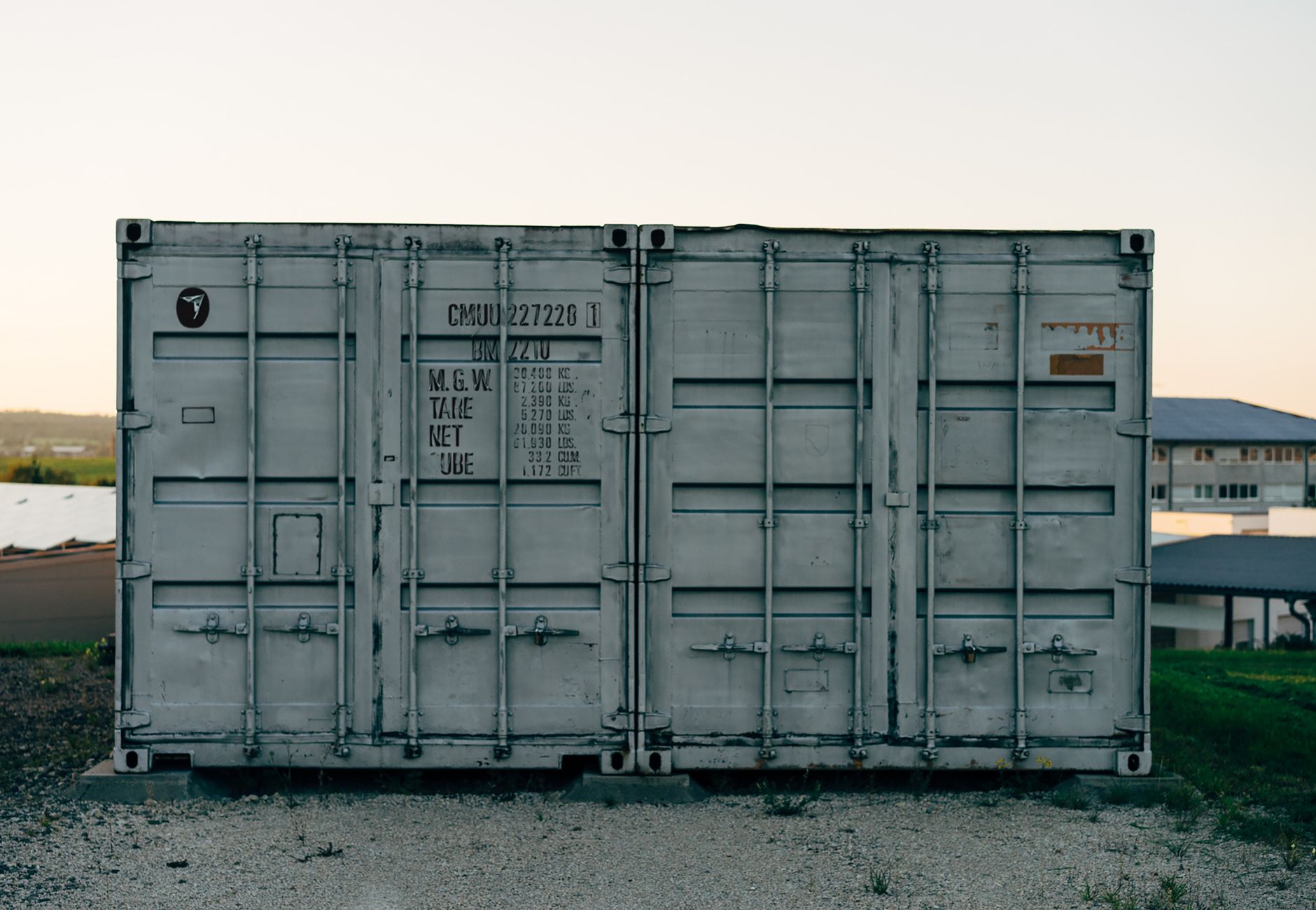 Photo by Markus Winkler on Pexels.
For fixed drone installations, that question usually gets punted to a facility engineer. For forward-deployed containerized systems, operating in remote pipelines corridors, austere FOBs, or disaster response zones, the answer has to be baked in from the start. You cannot string extension cords to a hostile border region. You cannot wait three days for a fuel resupply when your ISR coverage has a gap right now.
Power independence is not a nice-to-have for containerized drone platforms. It is the difference between a system that operates on demand and one that sits waiting for someone else's logistics chain.
The Problem with Assuming Power Exists
Most commercial drone-in-a-box products are designed with the implicit assumption of grid availability. The charging dock plugs in, the managed switch plugs in, the ground control hardware plugs in. That works fine for a corporate campus or a utility substation with shore power nearby.
Push that same system to a remote mining operation at altitude, a maritime vessel with inconsistent generator output, or a military staging area where generator fuel is rationed, and you find out fast how fragile those assumptions are. Voltage sags kill battery management systems. Generator cycling causes charging interruptions that degrade cell chemistry over time. Cold-soak overnight drains reserves before dawn operations even begin.
The platform itself may be ruggedized. The power dependency often is not.
What Integrated Power Actually Looks Like
A purpose-built containerized drone system treats energy as a subsystem, not an afterthought. That means the ISO container or shelter unit ships with its own generation, storage, and conditioning stack, and the drone operations run entirely off that stack regardless of what is or is not available externally.
In practice, this typically combines three elements:
Primary generation, usually a multi-fuel generator (JP-8, diesel, propane) sized to sustain continuous operations for 72 hours minimum without refuel. Some forward-deployed systems are now incorporating hybrid solar panels integrated into the container roof panels, which can extend that window considerably in high-insolation environments.
Battery storage buffer, a LiFePO4 bank that absorbs generator cycling and provides clean, stable DC output to the charging system. This decouples drone charging from generator state; the drones charge from the battery bank, which the generator maintains. The generator does not have to be running at the exact moment a drone lands.
Power conditioning, active voltage regulation and surge protection upstream of every sensitive load. Flight computers, RF links, and precision navigation hardware do not tolerate the kind of voltage variation that a basic generator produces under variable load.
graph TD
    A[/Generator/] --> B(Battery Storage Buffer)
    C[/Solar Input/] --> B
    B --> D[Power Conditioning Unit]
    D --> E[Drone Charging Bays]
    D --> F[Ground Control Systems]
    D --> G[Comms and Networking]
The diagram above is straightforward, but the engineering is not. Sizing the battery bank correctly for your operational tempo, number of sorties per day, ambient temperature effects on cell capacity, minimum reserve for emergency comms, requires real analysis specific to the mission profile.
Thermal Management Is Part of the Power Problem
Here is something that gets overlooked: in extreme cold or heat, your power budget changes dramatically. A LiFePO4 bank at -20°C delivers roughly 70-75% of its rated capacity. Battery heaters draw continuous power. The drone itself may require pre-warm cycles before flight that pull from your storage reserve.
Well-designed systems account for this by integrating thermal management into the same power budget model used for mission planning. You are not just asking "how many sorties can we fly", you are asking "how many sorties can we fly at this temperature, at this altitude, with this solar insolation, over this duration."
That is an energy modeling problem as much as it is an aviation problem.
Why This Matters for Procurement
When evaluating containerized drone platforms, whether for perimeter security, infrastructure inspection, or tactical ISR, demand a detailed power architecture document before anything else. Ask specifically: what is the maximum continuous load in watts, what is the generator fuel consumption rate at that load, what is the battery reserve in kilowatt-hours, and what is the minimum external input required for sustained operations?
If the vendor answers those questions with confidence and specifics, you are probably talking to someone who has actually deployed a system in the field. Vague answers about "flexible power options" are a signal worth heeding.
True autonomy means the system runs when you need it to run, not when the grid cooperates.
Get Drone in a Package in your inbox
New posts delivered directly. No spam.
No spam. Unsubscribe anytime.