Logistics Last Mile: How Containerized Drone Systems Solve Forward Resupply Without Putting Boots on the Road
 D. Marsh
The most dangerous vehicle in a combat zone isn't a tank. It's a supply truck on a predictable route.
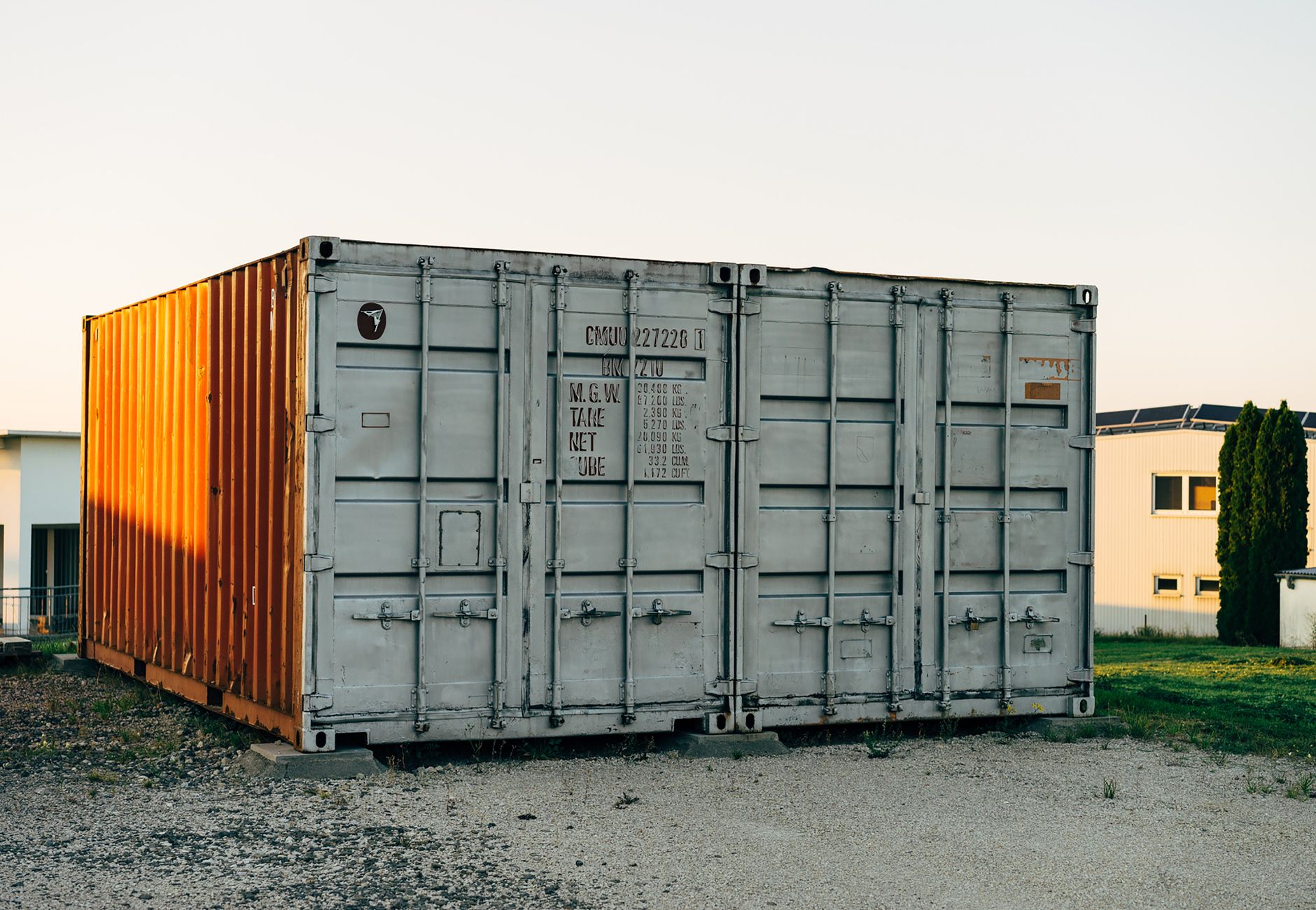 Photo by Markus Winkler on Pexels.
Convoy ambushes have shaped casualty statistics in every major conflict since World War II. The IED threat in Iraq and Afghanistan didn't create the problem, it just made it impossible to ignore. And yet, the default answer to forward resupply has remained stubbornly analog: put a driver in a cab, load a pallet, and hope the route is clear.
Containerized autonomous drone systems offer a different answer. Not a partial one, a structural replacement for the most exposed segment of the supply chain.
Why the Last Mile Is the Dangerous Mile
Military logistics planners call it the "last tactical mile", the stretch from a forward operating base or logistics node to a patrol base, observation post, or frontline unit. This leg of the journey is too short for rotary-wing assets to be cost-effective, too exposed for unarmored vehicles, and too irregular for fixed infrastructure. It's also where most resupply-related casualties occur.
Autonomous drones can cover 5–25 kilometers carrying payloads from 5 to 50 kilograms, depending on platform class. That range sits almost perfectly over the last tactical mile. The physics match the problem.
But a drone by itself doesn't solve the deployment challenge. Flying an asset out to a forward position means it has to launch from somewhere, be maintained somewhere, and return to somewhere. Without the right ground infrastructure, you've just moved the logistics problem one step back.
What a Containerized Resupply Node Actually Looks Like
A containerized resupply system, deployed in a standard ISO 20-foot container, packages everything the drone needs to operate without a dedicated airfield or ground crew standing by. Automated launch and recovery. Onboard charging or fuel management depending on platform type. Environmental controls that keep the system functional in temperature extremes. And enough onboard compute to handle mission planning and route deconfliction without a persistent comms link back to a C2 node.
Drop the container at a forward logistics element, connect shore power or a generator, and the system is operational within hours. No poured concrete. No tower. No dedicated operator standing watch around the clock.
Here's how a typical autonomous resupply cycle flows through a containerized node:
graph TD
    A[Mission Request from Forward Unit] --> B{Route & Payload Planning}
    B --> C[Automated Pre-Flight Check]
    C --> D[Launch from Container Node]
    D --> E[Autonomous Transit]
    E --> F[Payload Drop at Designated Point]
    F --> G[Return to Container]
    G --> H[Automated Recovery & Recharge]
The human touchpoints are at the start and the end of that chain, requesting the resupply and confirming receipt. Everything in between runs without a crew in the loop.
The Payload Question
Skeptics usually raise payload capacity here, and it's a fair challenge. A MLRS reload this is not. What autonomous aerial resupply can move: medical supplies, batteries, small arms ammunition, communications equipment, water, blood products, and rations. In practice, that covers a substantial portion of what forward units actually need on a daily basis, especially the time-sensitive items like medical materiel, where a 40-minute flight beats a 4-hour convoy wait with no comparison.
Multi-drone coordination from a single container node multiplies effective throughput without multiplying risk. Three drones running sequential sorties can deliver 150 kilograms across a shift without a single vehicle touching the road.
Positioning Changes Everything
Fixed drone launch infrastructure requires defending. A containerized node doesn't ask for permanence, it can be repositioned by flatbed, helicopter sling, or logistics vehicle as the front shifts. That mobility changes the tactical calculus entirely. Instead of building resupply infrastructure toward the fight and hoping it stays relevant, you move it with the fight.
That's the real value proposition here: not just autonomous delivery, but autonomous delivery capacity that refuses to become a fixed target.
Convoys will still have a role. Heavy equipment, bulk fuel, and large munitions aren't moving by drone anytime soon. But the daily friction of forward resupply, the predictable runs that make convoy ambushes possible, is solvable with systems that exist today, packaged in a container you can move with a forklift.
The technology is ready. The doctrine is catching up. And the drivers who don't have to make that run will never know what they didn't have to survive.
Get Drone in a Package in your inbox
New posts delivered directly. No spam.
No spam. Unsubscribe anytime.