Sensor Fusion in Containerized Drone Systems: How Multi-Modal ISR Collapses the Kill Chain
 D. Marsh
Persistent surveillance means nothing if the data arrives too late to act on. That's the operational problem sensor fusion is solving inside modern containerized drone systems, and the results are compressing timelines that once took hours down to minutes.
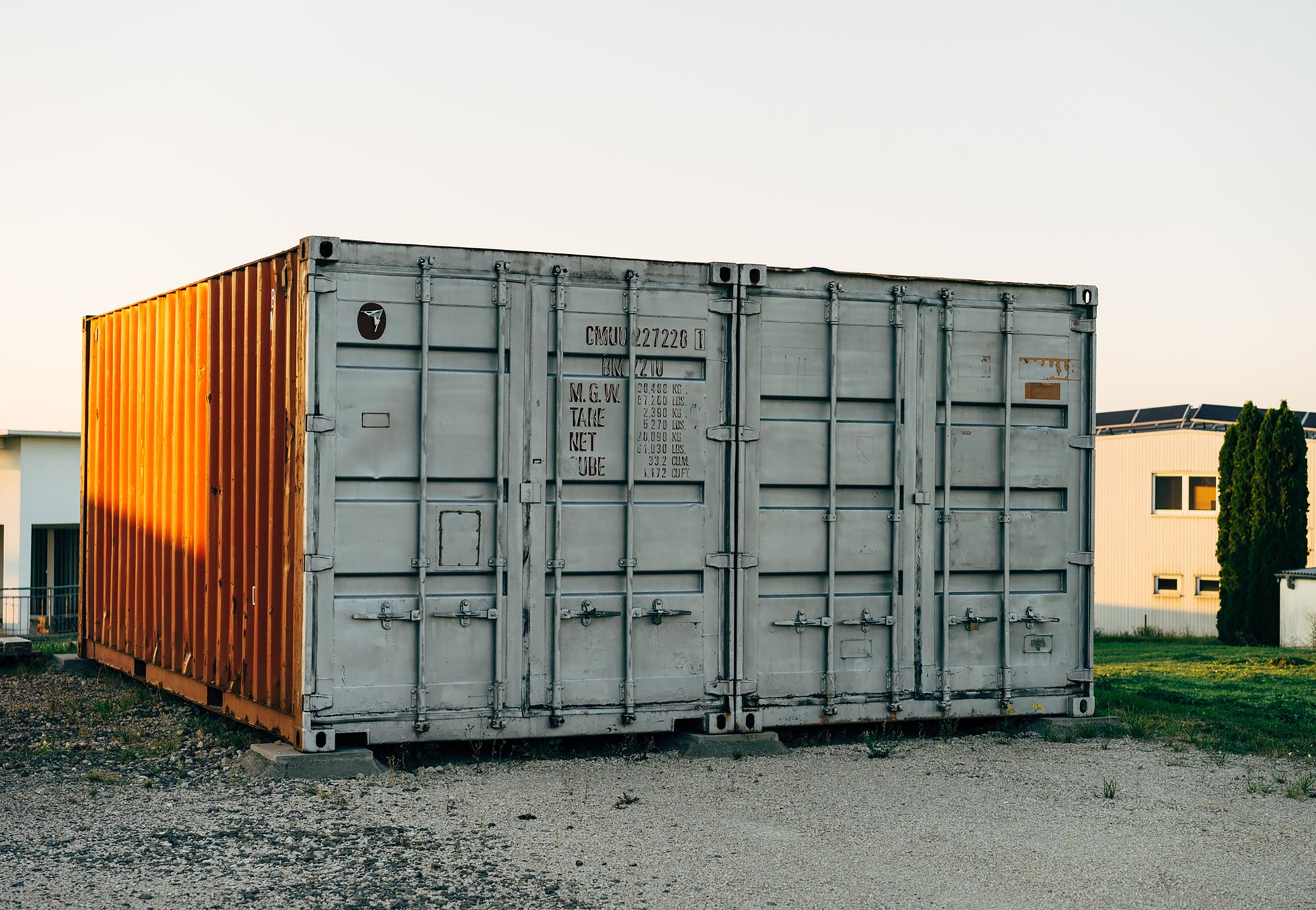 Photo by Markus Winkler on Pexels.
Traditional ISR pipelines were built around segregated sensor types. An EO/IR camera fed one feed. A synthetic aperture radar (SAR) payload fed another. Signals intelligence sat in a third lane. Analysts received each stream independently, correlated them manually, and forwarded assessments up the chain. The delay between collection and decision could span an entire operational window. By the time a commander received actionable intelligence, the target had moved, the convoy had dispersed, or the window had closed.
Sensor fusion changes the collection-to-decision sequence by running correlation at the edge, before data leaves the platform.
Here's what that looks like in a containerized deployment. The container houses two or more drone airframes with overlapping but distinct payload configurations: one running a dual-band EO/IR gimballed system, another carrying a ground moving target indicator (GMTI) radar module. Both airframes operate simultaneously on pre-programmed search patterns. Onboard processing hardware, typically a ruggedized GPU compute module mounted inside the container's electronics bay, ingests both data streams in real time. The fusion engine aligns spatial and temporal references, cross-cues radar detections to the EO/IR camera, and classifies targets before packaging the output as a single fused report.
The analyst receives one picture, not two competing feeds.
graph TD
    A[EO/IR Payload] --> C{Edge Fusion Engine}
    B[GMTI Radar Payload] --> C
    C --> D[Fused Target Report]
    D --> E[C2 Interface]
    E --> F[Commander Decision]
    F --> G[Tasking Update]
    G --> A
    G --> B
What makes containerized systems well-suited to this approach is physical integration density. Everything lives in one enclosure: the compute hardware, the power conditioning, the comms relay, and the airframes themselves. There's no latency introduced by transmitting raw sensor data across a link to a distant processing node. Fusion happens on-site, often inside the container before the drone has even landed.
That matters operationally for a specific reason. Contested environments limit bandwidth. A containerized system running local fusion reduces the data volume transmitted to higher echelons by roughly an order of magnitude. Sending a classified target package over a degraded SATCOM link is tractable. Sending two concurrent full-motion video streams plus radar imagery is not.
Payload modularity reinforces this. Containerized platforms built around swappable payload bays allow operators to reconfigure sensor combinations based on the mission. Day ISR over open terrain calls for a different loadout than night operations in a cluttered urban zone. The fusion engine doesn't care what payloads are plugged in; it reads capability flags from each sensor module and adjusts its processing pipeline accordingly. The operator selects the airframes, loads the payloads, and the system handles the rest.
Some operators underestimate how much fusion quality depends on calibration stability. When a payload gets swapped in the field, the spatial offset between that sensor and the airframe's inertial measurement unit (IMU) needs to be registered correctly or the fusion engine will produce positional errors. Well-designed containerized systems solve this with calibration fixtures built directly into the container's launch bay. Drop the payload into the mounting cradle, run a ten-second alignment routine, and the offset is logged. No external equipment, no specialized technician.
Look at where sensor fusion in containerized systems is already proving its value. Border monitoring deployments in remote terrain have used dual-payload configurations to distinguish human movement from animal movement at ranges exceeding five kilometers, with classification confidence high enough to cue a response without additional verification flights. Industrial perimeter applications have combined acoustic sensors with EO cameras inside containerized auto-launch systems to detect intrusion, classify the threat type, and generate a geo-tagged report before a human operator even reviews the initial alert.
The defense side is further along. Programs working toward autonomous ISR pods have specifically prioritized on-board fusion as a survivability feature. A container that can operate in a communications-denied environment and still deliver processed, actionable output is worth significantly more than one that depends on a clean uplink to a cloud processing node that may not be available when it matters.
Seamless multi-modal collection is not a feature that gets bolted on later. It gets designed in at the system level, which is exactly the kind of problem containerized platforms are positioned to solve from day one.
Get Drone in a Package in your inbox
New posts delivered directly. No spam.
No spam. Unsubscribe anytime.