Harsh Terrain, No Runway: How Containerized Drone Systems Handle High-Altitude Mountain Deployments
 D. Marsh
Mountain deployments break assumptions. The planning logic that works at sea level stops working somewhere around 8,000 feet, and by 14,000 feet most of it is gone entirely. Rotary-wing aircraft lose lift. Fuel consumption spikes. Ground vehicles get stopped by terrain that doesn't appear on anyone's threat matrix. And yet, the need for persistent ISR, resupply, and area coverage doesn't shrink because the altitude goes up.
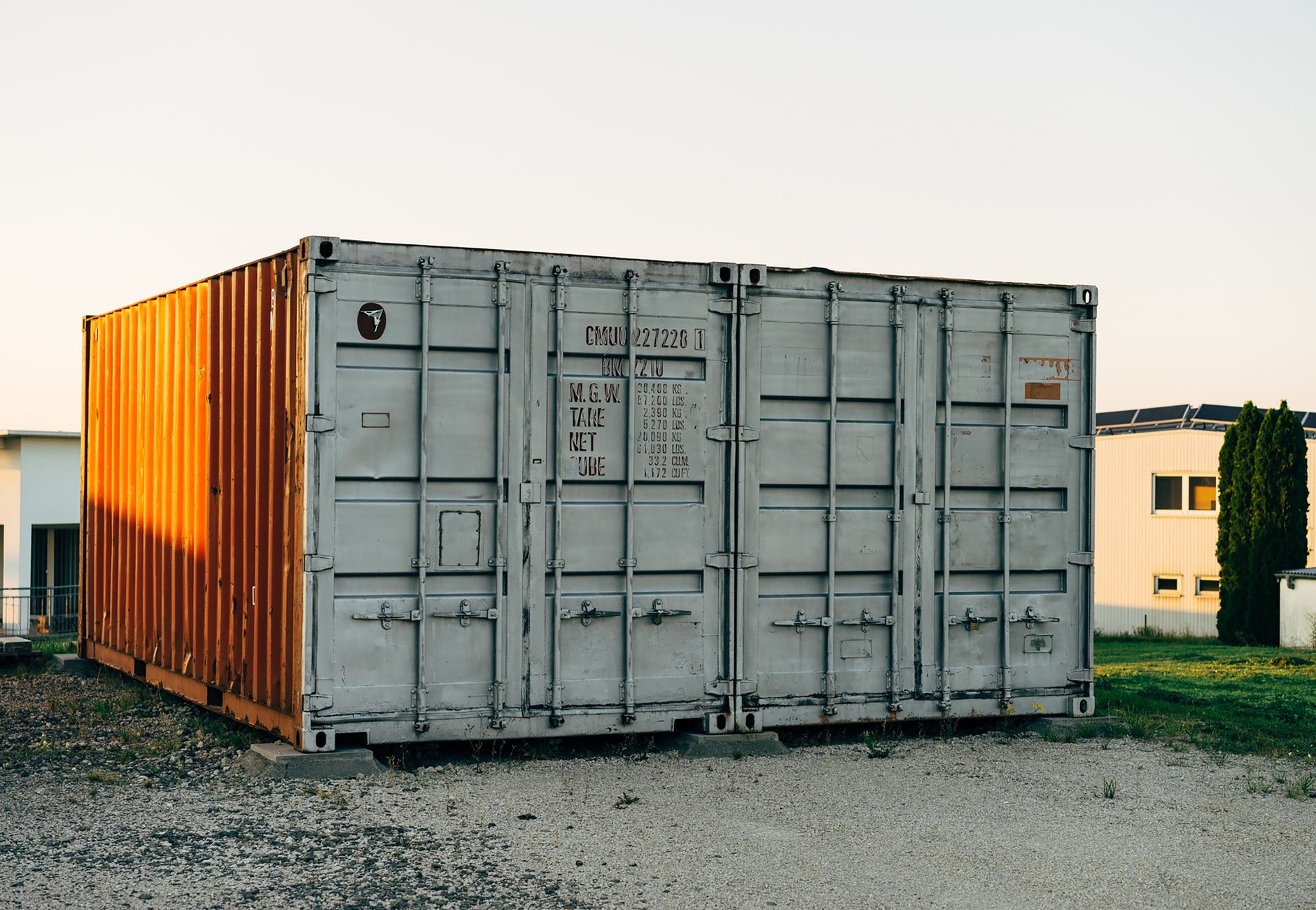 Photo by Markus Winkler on Pexels.
This is where containerized drone systems have been quietly earning their keep in high-elevation environments across multiple programs.
The Air Density Problem Is Real
Thin air punishes fixed-pitch rotors. A quad-rotor drone that lifts a 5 kg payload at 1,000 feet ASL may struggle to lift 2 kg at 15,000 feet. The physics aren't complicated: lower air density means less lift per unit of rotor disk area. Most commercial drone manufacturers publish sea-level specifications. Those numbers are optimistic before you even consider the temperature.
Containerized systems designed for high-altitude work address this upfront, not as an afterthought. Larger rotor diameters, variable-pitch configurations, and reduced payload profiles are baked into the platform spec rather than discovered on site. The container itself serves as the calibration reference: crews know the system has been tested at altitude because the deployment package was built around those parameters.
Fixed-wing UAS in containerized packages have a different advantage here. With enough forward runway (or a pneumatic launch rail), a high-aspect-ratio wing generates lift efficiently in thin air. Tube-launched and rail-launched configurations eliminate the runway problem entirely, which matters enormously when your deployment site is a ridgeline with 40 meters of usable flat ground.
Power at Altitude Requires a Different Calculus
Combustion generators lose roughly 3% of rated output per 1,000 feet of elevation. At 12,000 feet, a generator rated for 10 kW at sea level is producing closer to 6.4 kW. That affects charging cycles, thermal management systems, and how long a container can sustain autonomous operations before it needs resupply or battery rotation.
Containerized systems that integrate battery storage buffers decouple this problem from real-time generation. Solar panels at high elevation actually perform well: lower atmospheric scattering means higher direct irradiance, and cooler temperatures keep panel efficiency up. A well-designed container pod at altitude can run a meaningful charge-discharge cycle using solar plus battery, reducing dependence on fuel logistics that are themselves constrained by terrain.
The power architecture also handles cold-start conditions more reliably when it's integrated from the ground up. Lithium battery banks require thermal management below -10°C. In a container with an integrated heating circuit, that's a solved problem. In a field-expedient setup, it becomes a daily maintenance burden.
Logistics to the Site Is the Hard Part
Getting the system to a mountain deployment location shapes every other decision. ISO 20-foot containers are transportable by Chinook sling-load. Smaller ISO-spec pods fit inside a CH-47 cargo bay or can be palletized for a C-130 drop at a forward strip. That standardization matters because the transport assets already exist; operators don't need to negotiate bespoke rigging schemes.
Once on-site, the container serves as the forward operating node. No separate shelter. No crew tent configuration. The maintenance space, battery charging, sensor calibration, and communications suite are already inside. A two-person crew can spin up operations within hours of landing.
graph TD
    A[Strategic Airlift / Sling Load] --> B(Forward Mountain LZ)
    B --> C[Container Deployment: Power + Comms Online]
    C --> D{Mission Type}
    D --> E[/ISR Sortie: Fixed-Wing Rail Launch/]
    D --> F[/Resupply Sortie: VTOL Payload Drop/]
    E --> G((Recovery + Recharge Cycle))
    F --> G
    G --> C
Connectivity in Terrain That Blocks Everything
Mountains create radio dead zones with the same indifference they apply to everything else. Line-of-sight comms from a valley floor don't reach the other side of a ridge. Satellite links fill the gap, but latency and bandwidth constraints require the containerized system to operate with genuine autonomy rather than relying on a clean uplink.
Systems with onboard mission computers that can execute pre-loaded flight plans, handle geofence logic, and return-to-home without human intervention aren't optional at altitude. They're the baseline requirement. A container that depends on a constant 50 ms ping to a command node won't survive contact with mountain terrain for long.
The systems that work in these environments are built around the assumption that the link will drop. Autonomy handles the gap; comms handles the handoff when connectivity returns.
Why This Deployment Profile Matters Now
High-altitude border regions, mountain passes with strategic relevance, remote infrastructure corridors: these aren't theoretical deployment scenarios. Several active operational programs in contested mountain environments have validated that containerized autonomous systems outperform both manned aviation and improvised drone deployments when the terrain and altitude combine against you.
The container doesn't just protect the drone. It standardizes the entire support chain so that altitude becomes one more variable the system was already designed around.
Get Drone in a Package in your inbox
New posts delivered directly. No spam.
No spam. Unsubscribe anytime.