Multi-Domain Integration: How Containerized Drone Systems Bridge Air, Ground, and Sea Assets
 D. Marsh
Multi-domain operations look clean on a whiteboard. On the ground, they fall apart fast. Air assets talk to air assets. Ground vehicles talk to ground vehicles. Maritime platforms operate on their own frequencies, their own data links, their own command chains. The result is a seam-riddled picture where no single operator sees the full battlefield, and coordination happens through radio calls and prayer.
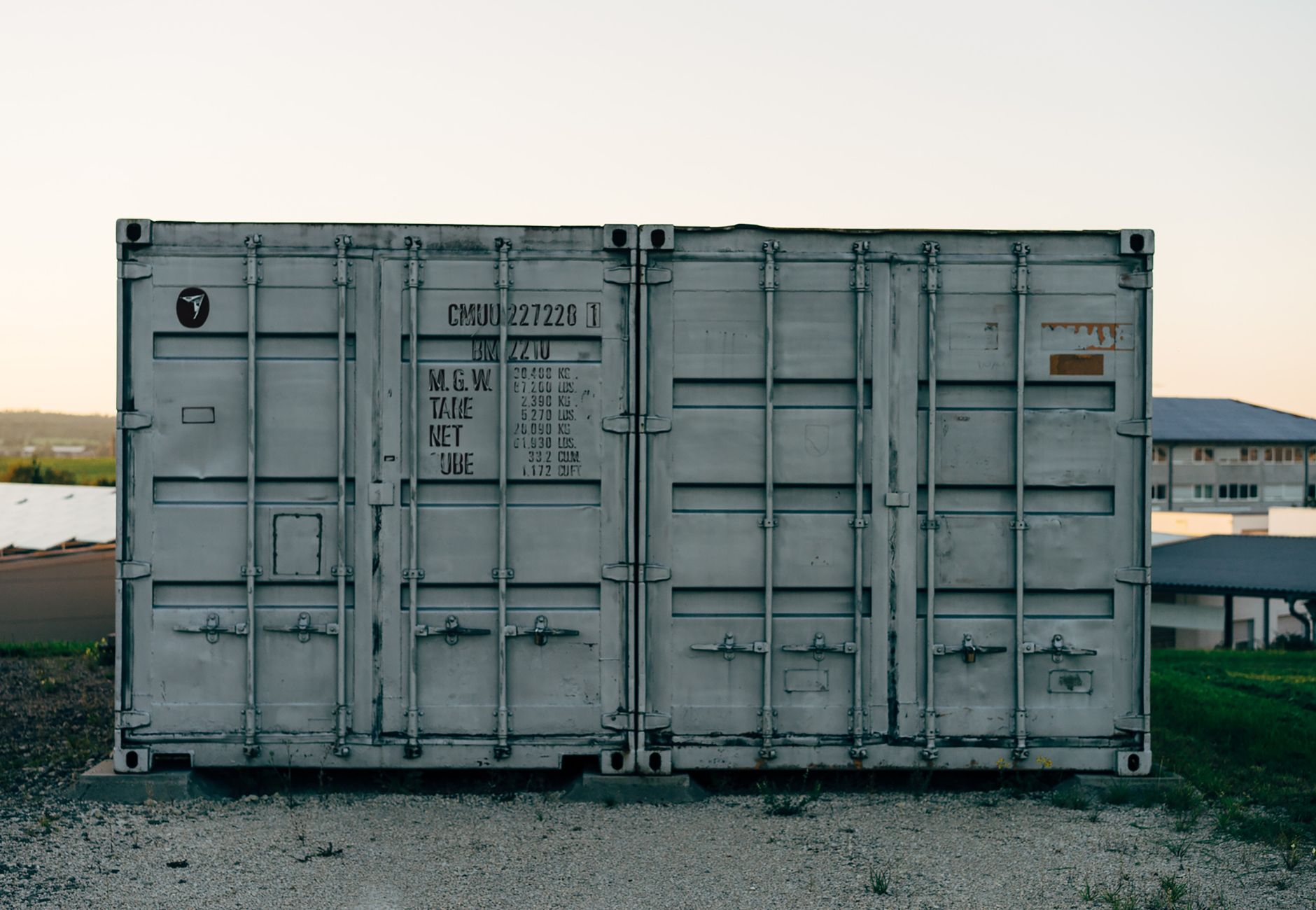 Photo by Markus Winkler on Pexels.
Containerized drone systems are solving this problem in a way that fixed installations and purpose-built command nodes never could.
The Seam Problem in Multi-Domain Ops
Every joint operation has seams: the gaps between domains where information slows down, gets reformatted, or disappears entirely. A maritime patrol drone spots a target. That data gets encoded, transmitted up a chain, passed to a joint operations center, re-encoded, and pushed back down to a ground unit. By the time the ground unit has a firing solution, the target has moved.
The traditional answer has been bigger, better-connected command posts. More servers, more analysts, more radios. That answer brings its own problem: fixed nodes are fixed targets, and scaling up a static headquarters doesn't make information move faster at the edges.
A containerized drone system positioned at the seam changes the math entirely. Rather than routing data through a distant hub, the container becomes the hub. It sits at the convergence point of air, ground, and maritime activity, processing sensor feeds from all three domains and outputting fused situational awareness to whichever unit needs it.
What Integration Actually Looks Like
Consider a coastal interdiction scenario. A naval surface group operates three kilometers offshore. An Army maneuver element holds a beach corridor. An Air Force ISR asset orbits at altitude, feeding wide-area imagery.
Without a unifying node, each element sees its own slice. With a containerized drone system positioned at the shoreline, the picture changes:
graph TD
    A[Maritime UAS Feed] --> D{Containerized Node}
    B[Ground Sensor Network] --> D
    C[Airborne ISR Link] --> D
    D --> E[Fused Common Operating Picture]
    E --> F[Naval Surface Group]
    E --> G[Ground Maneuver Element]
    E --> H[Tasking Queue for Organic UAS]
The container ingests feeds from all three sources, runs sensor fusion at the edge, and distributes a common operating picture across all three units simultaneously. Organic drones launch from the container itself to fill gaps in coverage or to prosecute targets the overhead asset can't reach. No data needs to leave the tactical edge to be processed. No analyst at a rear headquarters has to synthesize three separate feeds.
That's not a theoretical capability. The compute hardware to run multi-source fusion exists now, fits in a standard enclosure, and runs on generator power a forward unit can actually sustain.
Why the Container Form Factor Matters Here
You could put a multi-domain integration node in a vehicle. You could put it in a tent. Both options have real operational costs: vehicles get channelized in terrain, tents take time to establish and are visible from the air, and neither option ships on a standard pallet or loads into a C-130 without modification.
A 20-foot ISO container does all of those things cleanly. It ships via sea, rail, air, or truck without reconfiguration. It arrives with systems already integrated, calibrated, and tested. Setup time at a new location drops from days to hours. When the situation changes and the unit moves, the container moves with it.
For multi-domain integration specifically, that mobility matters because seams shift. Where the ground-maritime boundary sits today may be thirty kilometers different tomorrow. A fixed integration node built for today's seam is useless when the operational picture changes. A containerized node repositions to wherever the seam is.
The Comms Stack Inside the Box
Making multi-domain integration work requires handling multiple data link standards simultaneously. Ground units may run Link 16 or ATAK-based mesh networks. Maritime platforms often operate on different waveforms. Airborne ISR assets may push data via satellite relay or line-of-sight tactical data links.
Modern containerized systems handle this by housing software-defined radios alongside dedicated gateway hardware that translates between protocols in real time. The operator doesn't manage the translation layer. The system handles it autonomously, presenting a unified feed regardless of what's flowing in from which domain.
This is where the autonomous processing piece becomes operationally significant. Human operators can synthesize two or three data streams. When six sources are feeding simultaneously across three domains, the edge compute stack has to do the heavy lifting before it reaches a human screen.
Fielding Reality
None of this works if the system is too complex to operate forward. The best multi-domain integration stack fails if it requires a team of specialists who aren't organic to the unit.
Containerized systems designed for this role increasingly use operator interfaces built for the tactical edge: simplified displays, automated data ingestion, and exception-based alerting rather than continuous monitoring. The system does the work. The operator makes decisions.
That balance is what separates a deployable capability from a demonstration. Containerized autonomous systems, ready to deploy, means ready in the hands of the unit that needs them, not just ready in a lab.
Get Drone in a Package in your inbox
New posts delivered directly. No spam.
No spam. Unsubscribe anytime.