Shore to Ship: How Containerized Drone Systems Solve the Offshore Platform Surveillance Problem
 D. Marsh
Offshore platforms sit in some of the harshest operating environments on the planet. Salt spray, 40-knot gusts, rolling decks, and distances that exceed the practical range of most commercial drone solutions create a surveillance problem that traditional approaches have never fully solved. Manned helicopter patrols are expensive and weather-dependent. Fixed CCTV covers angles, not perimeters. And sending a guard boat to investigate every radar anomaly burns fuel and time.
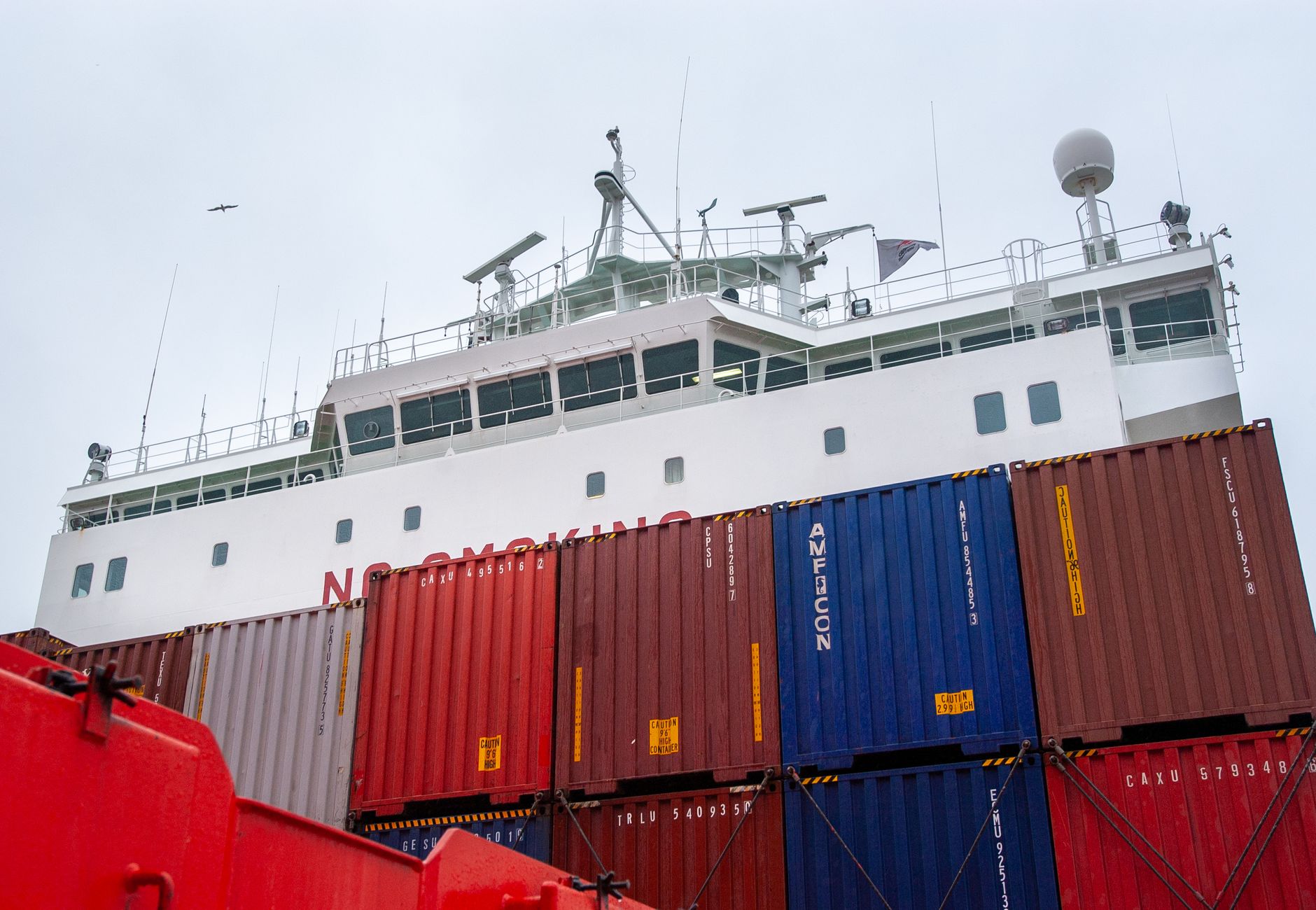 Photo by Simon R. Minshall on Pexels.
Containerized drone systems fit this problem almost uncomfortably well.
The Core Surveillance Gap on Offshore Installations
Most offshore oil and gas operators rely on a combination of radar, AIS tracking, and periodic visual inspection to monitor their perimeter. Radar tells you something is there. AIS tells you what vessels are broadcasting. Neither tells you what's actually happening at the waterline of an unlicensed vessel sitting 300 meters off your production deck at 0200.
That gap, between detection and confirmation, is where incidents happen. Piracy, sabotage, illegal anchoring near subsea infrastructure, and unauthorized boarding all exploit exactly the delay between radar contact and human eyes on target. A containerized drone system stationed on the platform deck eliminates that delay entirely.
When the radar flags an anomaly, the system launches autonomously, flies a pre-programmed intercept profile, and streams live EO/IR imagery back to the control room before a duty officer has finished putting on a jacket. No pilot required. No weather window negotiation. Just a confirmed picture.
Why Standard Drone-in-a-Box Products Fall Short Offshore
Plenty of commercial drone-in-a-box systems work well in benign environments: quarries, solar farms, construction sites. Offshore platforms are not those environments.
The specific challenges:
Motion compensation. A platform in a 3-meter swell is not stationary. Standard landing pads designed for flat, fixed surfaces can't tolerate a deck that pitches and rolls. Containerized systems built for maritime deployment include active heave compensation in the landing cradle, keeping the drone secure through recovery even in moderate sea states.
Salt and corrosion management. Aluminum airframes and commercial-grade electronics have a short service life in continuous salt exposure. Purpose-built offshore containerized systems use sealed electronics bays, conformal coatings on circuit boards, and corrosion-resistant alloys throughout. The container itself provides a controlled environment between sorties.
Wind limits. Most commercial platforms list a 10-12 m/s wind limit for autonomous operations. Offshore platforms routinely see sustained winds of 20+ m/s with gusts well above that. Industrial containerized systems engineered for offshore deployment use heavier VTOL platforms with higher disc loading, sacrificing some efficiency for the ability to hold station and recover in conditions that would ground consumer-grade hardware.
The Container as Infrastructure
Placing an ISO-standard container on a platform deck gives operators something valuable: a pre-integrated, self-contained system that doesn't require permanent installation into the platform's own infrastructure.
Power can come from a dedicated generator integrated into the container, or from a platform tap if the operator prefers. Communications route through satellite or point-to-point microwave links already present on most production platforms. The container arrives pre-configured, gets craned onto the helideck or an available deck space, and connects to two or three utilities. Commissioning measured in hours, not weeks.
Compare that to installing a fixed surveillance tower with dedicated wiring runs, structural reinforcement, and regulatory sign-off on every penetration into the platform skin. The container approach skips the approval queue entirely on most installations because it's treated as deck cargo rather than a permanent modification.
graph TD
    A[Radar / AIS Anomaly Detected] --> B{Threat Classification}
    B --> C[Autonomous Launch Triggered]
    C --> D[Intercept Profile Flown]
    D --> E[Live EO/IR Feed to Control Room]
    E --> F{Human Decision Point}
    F --> G[Vessel Challenged / Authorities Notified]
    F --> H[False Positive Logged, Drone Returns]
Persistent Watch Without Persistent Crew
The economics of offshore surveillance are punishing. Putting a trained observer on a platform costs roughly the same as putting any other specialist offshore: rotary wing transfer, accommodations, meals, and a day rate that reflects the conditions. For a surveillance function that requires constant presence but only occasionally demands active human judgment, that cost is hard to justify.
A containerized system operates continuously. Between sorties, the drone recharges inside the sealed bay. Scheduled patrols run on a pre-set cadence. Anomaly-triggered launches run on demand. The only human in the loop is the duty officer reviewing alerts and making decisions on confirmed contacts. One person can monitor multiple installations simultaneously from an onshore operations center.
For operators managing clusters of wellheads, subsea infrastructure, or remote FPSOs, that kind of centralized watch is transformative. The surveillance coverage scales without the headcount scaling with it.
Beyond Oil and Gas
Offshore wind farms face an identical problem at larger scale and lower security budgets. A single offshore wind installation might cover 200 square kilometers of ocean. Monitoring turbine access, detecting unauthorized vessels near cable infrastructure, and documenting ice or debris accumulation around foundations all demand aerial observation that no fixed system can provide economically.
Port authorities managing anchorage zones, coast guards covering remote island chains, and naval installations monitoring standoff distances around fixed assets all share the same underlying need: persistent, responsive aerial observation in a salt-air environment where hardware reliability is non-negotiable.
The containerized approach answers all of them with the same product. That's the value of building a system around the environment rather than the specific use case. Offshore is the stress test. If the system works there, it works almost anywhere.
Get Drone in a Package in your inbox
New posts delivered directly. No spam.
No spam. Unsubscribe anytime.