Theater Logistics Under Fire: How Containerized Drone Systems Survive the Anti-Access Environment
 D. Marsh
Modern contested environments don't just threaten the drones in the air. They threaten the infrastructure keeping those drones flying in the first place.
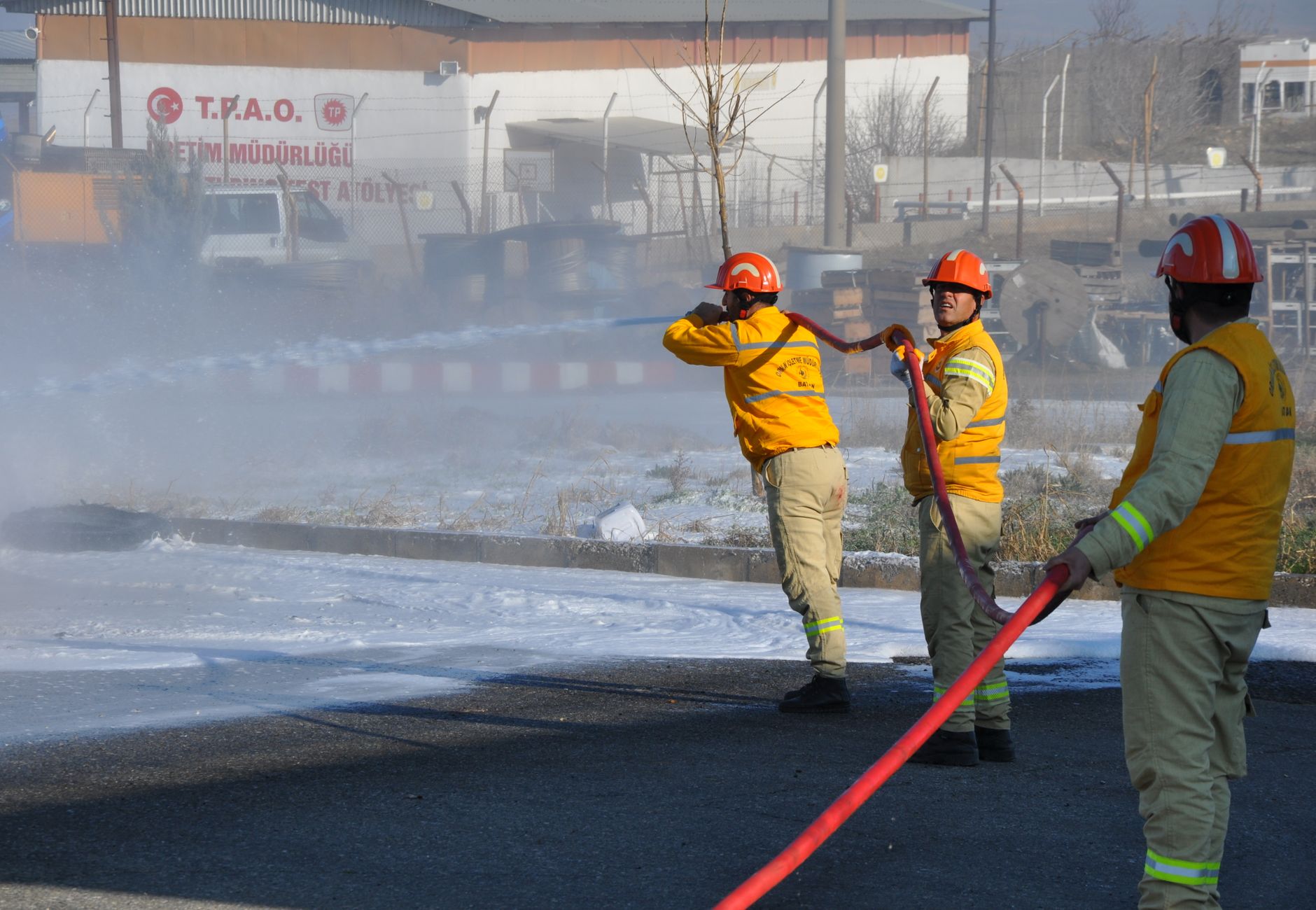 Photo by Fahrettin Turgut on Pexels.
Anti-access/area-denial (A2/AD) networks have matured significantly over the past decade. Long-range surface-to-air missiles, precision ballistic systems, and loitering munitions now reach far enough to make fixed forward operating bases genuinely vulnerable. That vulnerability changes the calculus for how autonomous drone systems need to be positioned, moved, and protected before a single aircraft ever launches.
This is where containerized architecture earns its keep in ways that go beyond convenience.
The Problem With Fixed Infrastructure
Conventional drone support infrastructure assumes some degree of sanctuary. A hangar. A hardened shelter. A runway with perimeter security. In a peer or near-peer conflict, that assumption is a liability. Fixed sites are findable. Findable sites are targetable. Targetable sites get struck.
The 2020s have produced a clear operational lesson from multiple theaters: facilities that can be located by commercial satellite imagery, social media geolocation, or signals intelligence do not survive sustained precision fires. Drone ground stations are not exempt from this dynamic.
A containerized drone system sidesteps the fixed-site problem by design. There is no permanent facility to geolocate. The system moves with the force, occupies a position for a tactical window, and displaces before the targeting cycle can close.
Shoot and Scoot, Applied to ISR Infrastructure
Military planners have applied "shoot and scoot" doctrine to artillery for generations. The same logic now applies to drone support infrastructure under A2/AD pressure.
A containerized system can execute what planners sometimes call a "base denial" posture: launch operations from one grid, recover to a different grid, and never occupy the same position long enough to become a pattern of life. The container itself travels on a standard flatbed, HEMTT, or ship's deck. No special handling. No signature beyond a box.
This mobility does something critical for sustained operations: it decouples drone tempo from geographic permanence. The ISR cycle continues even while the ground element relocates. That's a capability fixed infrastructure simply cannot replicate.
graph TD
    A[Container at Position 1] --> B(Launch & Operate)
    B --> C{Threat Detected?}
    C -- Yes --> D[Recover Drones]
    D --> E[Displace to Position 2]
    E --> B
    C -- No --> B
Signature Management at the Ground Level
A2/AD systems hunt for signatures: radar returns, heat bloom, RF emissions, physical size. Containerized drone systems compress all of these compared to a conventional forward operating base with dedicated drone facilities.
Thermal signature is managed through insulated container walls and active cooling systems contained within the ISO footprint. RF emissions can be controlled through internal shielding and disciplined comms protocols (a topic covered separately in the spectrum discipline post, but worth noting here as a design dependency). Physical footprint is, by definition, one or two containers rather than a multi-structure compound.
The result is a ground signature that is genuinely harder to distinguish from routine logistics traffic. An S-400 battery tracking targets doesn't prioritize what looks like a cargo container on a truck. That ambiguity buys time and survivability.
Distributed Basing Without the Overhead
One of the standard responses to A2/AD pressure is distributed basing: spreading assets across many small sites instead of concentrating them at a few large ones. Sound in theory. Expensive and manpower-intensive in practice, when each site requires its own support infrastructure.
Containerized systems solve the overhead problem. Each container is a self-contained node: power, maintenance capability, communications, and drone readiness are all internal. Spin up a site, it's operational. Consolidate two sites, nothing is lost in translation because both containers are functionally identical.
This modularity enables a distributed basing concept that actually scales. Ten containers across ten grid squares, each independently capable, each independently displaceable. No single point of failure. No single aiming point for an adversary's fires planner.
Logistics Survivability Is Operational Survivability
There's a tendency in capability discussions to separate "the drone" from "the system keeping the drone flying." In A2/AD environments, that separation is artificial and dangerous.
Sustaining drone operations under fire requires that ground infrastructure survive long enough to matter. Containerized systems achieve that survival through mobility, low signature, and standardized logistics compatibility with existing military transport networks.
The drone that stays in the air over a contested target does so because something on the ground survived long enough to support it. Under A2/AD conditions, that something needs to be a box that moves, not a building that doesn't.
Get Drone in a Package in your inbox
New posts delivered directly. No spam.
No spam. Unsubscribe anytime.