Water-Based Insertion: Why Containerized Drone Systems Are Built for Maritime Forward Deployment
 D. Marsh
Most conversations about containerized drone systems start on land. FOBs, austere airstrips, vehicle convoys. That's fair. That's where most of the operational demand has been. But the container form factor was born at sea, and the military case for water-based insertion of autonomous drone packages is stronger than most planners acknowledge.
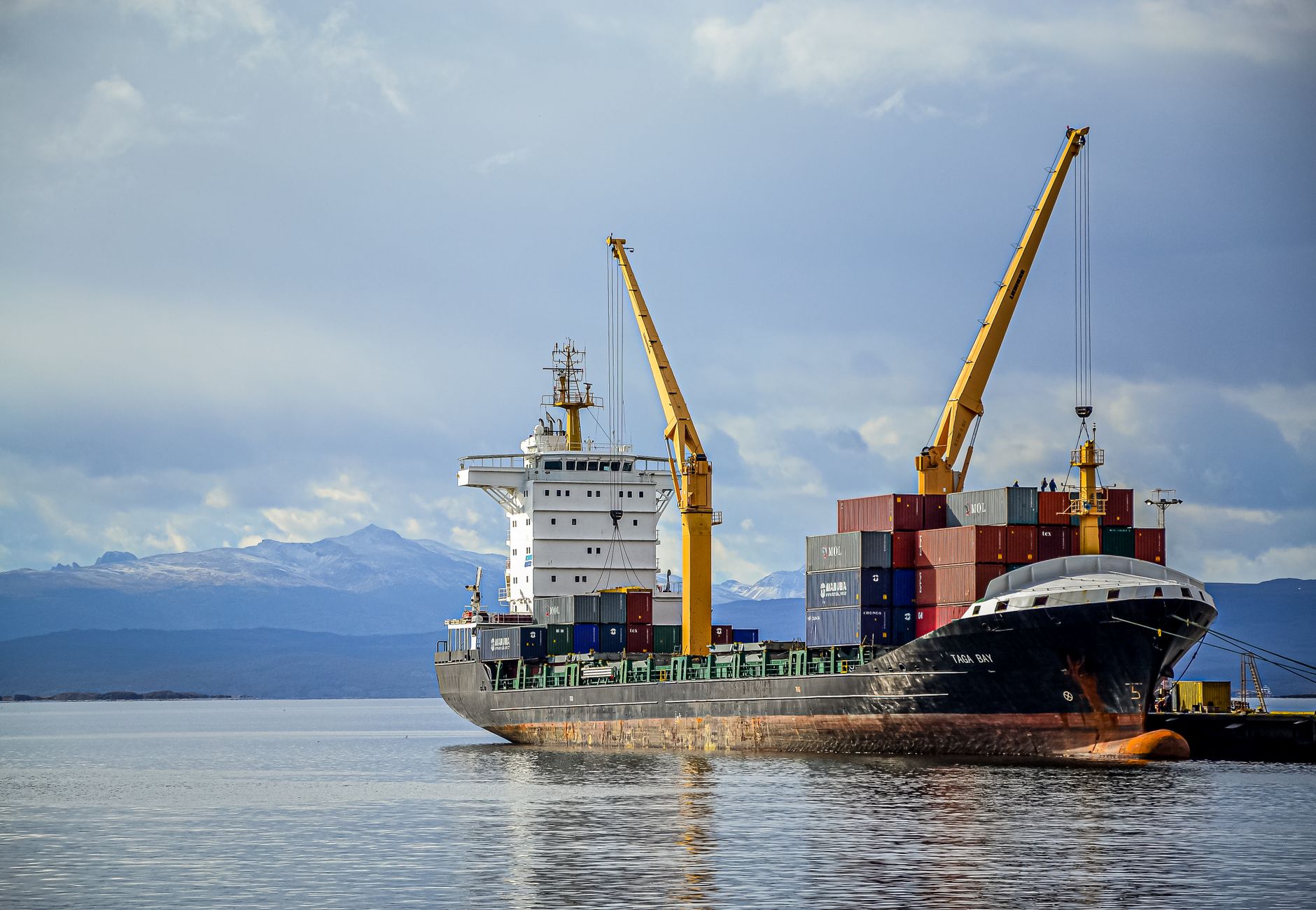 Photo by
 Shipping containers are ISO-standard precisely because they were designed to move between ships, trucks, and rail without re-handling. Every crane operator on every commercial port and every military logistics vessel already knows how to work with them. That interoperability isn't incidental, it's the whole point.
The Littoral Problem Nobody Wants to Solve Twice
Littoral operations are logistically brutal. You're working in the seam between naval power projection and land-based maneuver, and neither community fully owns the problem. Rotary-wing ISR is expensive and audible. Fixed-wing coverage requires coordination with assets that have competing taskings. Ground sensors are either too limited in range or too exposed to be left unattended.
A containerized drone system changes the calculus. Load it onto a landing craft, an HSV, or even a commercial ro-ro vessel under a civilian manifest. Once positioned, on a beach, a pier, an island auxiliary, the container opens and begins autonomous operations. No crew required for setup. No specialized handling equipment beyond what maritime logistics already carries.
The drones don't care that they launched from a coastline instead of a paved pad. The container does.
What the Container Actually Protects Against at Sea
Salt air is a drone killer. Humidity, chloride corrosion, and condensation cycling will destroy avionics faster than almost any combat condition. This is exactly why purpose-built fly-away kits fail in maritime environments, they weren't sealed, climate-controlled, or built to survive a two-week transit in a ship's hold.
A properly spec'd containerized system comes with positive-pressure sealing, desiccant or active dehumidification, and corrosion-resistant internal mounting. The drone inside arrives operational, not requiring a depot-level inspection just because it crossed an ocean.
There's also the matter of security. A sealed container on a vessel deck is indistinguishable from commercial cargo. An antenna farm, a pallet of drone cases, and a team of technicians is not.
Insertion Sequence: From Ship to Orbit
The deployment flow for a maritime containerized drone system is tighter than most people assume. Here's how a realistic sequence runs:
graph TD
    A[Container loaded aboard vessel] --> B[Transit, sealed, climate-controlled]
    B --> C[Offload at forward position]
    C --> D{Power source available?}
    D -- Yes --> E[Shore power or vessel tie-in]
    D -- No --> F[Onboard generator startup]
    E --> G[Autonomous launch sequence begins]
    F --> G
    G --> H[Drone on-station, ISR or strike tasking]
From container doors open to first drone airborne: under thirty minutes, with a two-person crew. That timeline holds whether the container is sitting on a beach landing zone or bolted to the deck of a coastal patrol vessel.
Vessel-Based Persistent Operations
The more interesting case isn't insertion, it's persistence. A containerized drone system mounted semi-permanently aboard a patrol vessel or a forward-deployed logistics ship creates a mobile ISR platform that repositions with the fleet. Fixed ground stations don't follow the battle. A container lashed to a deck does.
This matters for island chain defense, chokepoint monitoring, and anti-smuggling operations where the area of interest shifts week to week. The drone system goes where the threat is, not where the infrastructure happened to be built years ago.
Navies operating in the Pacific, the Persian Gulf, and the Baltic have all identified gaps in persistent maritime domain awareness. The answer isn't always another satellite pass or another P-8 sortie. Sometimes it's a container on a ship that no one is looking at twice.
The Handling Problem Is Already Solved
Opponents of maritime containerized deployment usually raise crane capacity, deck space, or vessel modification requirements. These objections apply to bespoke systems. They don't apply to ISO containers, because the entire global maritime logistics chain is already built around handling them.
Every amphibious ship, every logistics vessel, every forward staging base with a pier has the gear to move a 20-foot container. No program of record required. No new training pipeline. No special-to-type equipment in the supply chain.
The container didn't need to be adapted for maritime use. It started there. Autonomous drone systems that live inside one inherit that advantage from day one, and that's not something any purpose-built system can replicate without starting over.
Get Drone in a Package in your inbox
New posts delivered directly. No spam.
No spam. Unsubscribe anytime.