Edge Computing in Containerized Drones: When Processing Power Meets the Field
 D. Marsh
Your expensive ISR drone just collected 4TB of thermal imagery from a pipeline inspection. Now what? Ship it back to headquarters for analysis while the potential gas leak continues?
This scenario plays out daily across military and industrial operations. Traditional drone deployments treat aircraft as flying USB drives, collect data, return to base, plug in, wait. Edge computing flips this script entirely.
The Bandwidth Reality Check
Most deployment sites don't have fiber optic connections. A forward operating base in rural terrain might share a single satellite uplink across dozens of systems. Industrial facilities often rely on legacy networks never designed for multi-gigabyte data streams.
Consider the math: high-resolution multispectral sensors generate roughly 100GB per flight hour. Standard military SATCOM provides 2-10 Mbps on a good day. You're looking at 22+ hours to transmit one hour of flight data.
Edge processing solves this by moving computation to the container itself. Instead of streaming raw sensor data, you transmit actionable intelligence.
Container-Native Processing Architecture
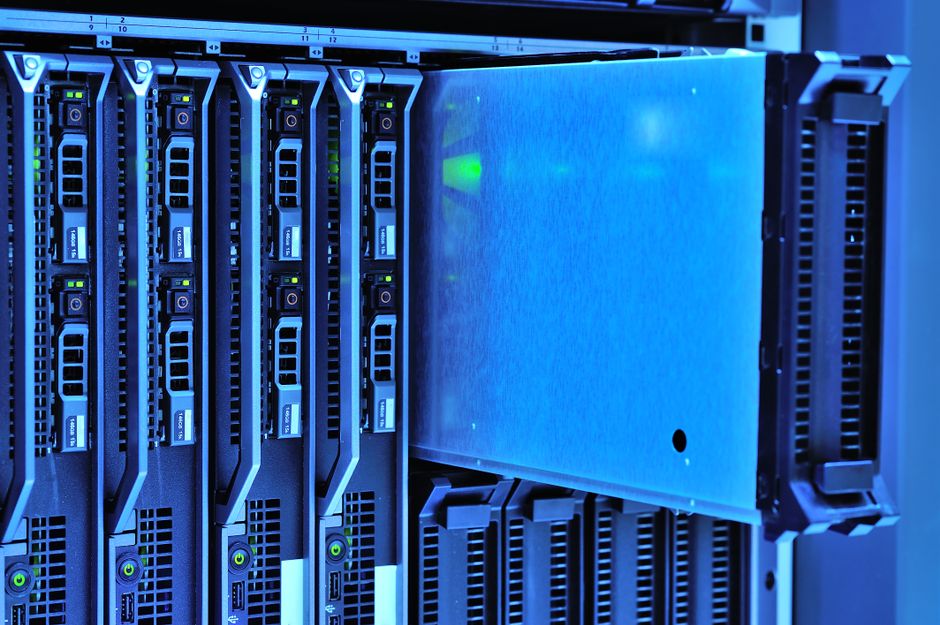
Modern containerized drone systems integrate compute modules directly into ISO-standard enclosures. These aren't laptop-grade processors, we're talking NVIDIA Jetson AGX Orin modules delivering 275 TOPS of AI performance while drawing under 60 watts.
The processing pipeline looks like this:
graph LR
    A[Raw Sensor Data] --> B[Edge Compute Module]
    B --> C[AI/ML Processing]
    C --> D[Anomaly Detection]
    C --> E[Object Classification]
    C --> F[Geospatial Analysis]
    D --> G[Priority Alerts]
    E --> G
    F --> G
    G --> H[Tactical Network]
Real-World Applications
Take perimeter security monitoring. Traditional approaches require human operators to watch multiple video feeds simultaneously, a recipe for missed threats. Edge-enabled containers run computer vision models trained on specific threat signatures.
The system identifies potential intrusions in real-time, not after someone reviews footage hours later. False positive rates drop below 2% with properly trained models. Response times shrink from minutes to seconds.
Pipeline inspection offers another compelling use case. Thermal anomalies indicating potential leaks get flagged immediately. GPS coordinates, severity assessments, and recommended actions transmit instantly to maintenance teams. Raw imagery stays local unless specifically requested.
Deployment Flexibility
Why does the container matter here? Standardization.
Your edge computing stack deploys identically whether you're mounting it on a Humvee, shipping it to an oil platform, or air-dropping it into a disaster zone. Power, cooling, and network connections follow established standards.
Swapping processing modules takes minutes, not hours. Need more GPU power for computer vision? Slide in a different compute blade. Switching from surveillance to signals intelligence? Different software stack, same hardware envelope.
Power and Thermal Management
Edge computing demands power. Lots of it. Container systems solve this through integrated power management that traditional drone platforms can't match.
Solar panels, fuel cells, and grid connections all feed standardized power distribution units. Thermal management uses the container's entire volume for heat dissipation rather than cramming everything into an aircraft's limited space.
This enables sustained processing that would quickly overheat smaller platforms. Multi-hour analysis jobs run continuously while drones cycle through launch, mission, and recovery phases.
The Intelligence Multiplication Effect
Smart containers don't just process their own data, they correlate inputs from multiple sources. Acoustic sensors, seismic monitors, weather stations, and other container-based systems feed a common intelligence picture.
What emerges isn't just processed data but genuine situational awareness. Patterns invisible to individual sensors become obvious when multiple data streams combine through shared edge processing resources.
Looking Forward
Edge computing transforms containerized drone systems from expensive data collectors into autonomous intelligence platforms. Response times measured in milliseconds replace analysis cycles measured in days.
The question isn't whether edge processing belongs in your drone containers. It's whether you can afford to deploy systems without it.
Get Drone in a Package in your inbox
New posts delivered directly. No spam.
No spam. Unsubscribe anytime.