Fly-Away Kits Are Dead: Why Containerized Drone Systems Win the Rapid Deployment Argument
 D. Marsh
Fly-away kits had a good run. Roll-aboard cases, modular foam inserts, color-coded connectors, the whole system designed to get an operator from tarmac to airborne in under an hour. For small teams running deliberate ISR missions in permissive environments, that was enough.
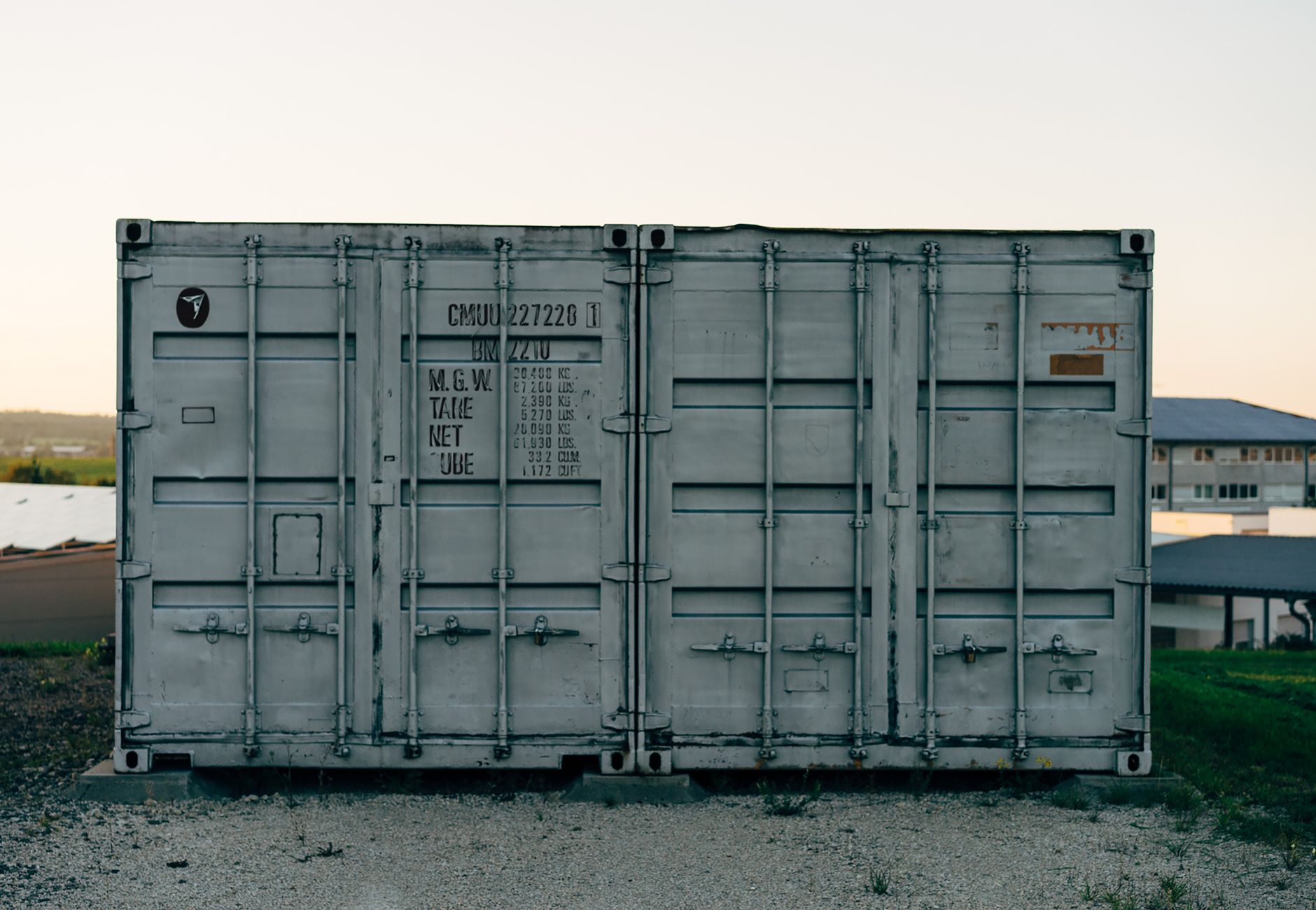 Photo by Markus Winkler on Pexels.
It isn't enough anymore.
The operational tempo that actually exists, not the one in the acquisition brief, demands something different. Units aren't getting 45 minutes of calm prep time on a flat surface with good lighting. They're getting 15 minutes of organized chaos at a staging area, handed a mission change, and told to push forward. Fly-away kits weren't designed for that. Containerized drone systems were.
What a Fly-Away Kit Actually Costs You
The pitch for fly-away kits is portability. Small footprint, air-transportable, low barrier to spin up. What the pitch leaves out is the hidden labor those kits generate every single time you use them.
Somebody has to unpack, assemble, calibrate, verify, fly, recover, disassemble, inspect, repack, and recharge. Every sortie. That's not a criticism of the people doing it, it's a systems problem. When those steps live in a checklist rather than in the machine itself, you're relying on human consistency under pressure. That's a fragile dependency.
Containerized systems collapse most of that checklist into automated pre-launch sequences. The drone returns, docks, charges, and runs self-diagnostics without a technician standing over it. By the time your operator needs another sortie, the aircraft is ready, not waiting on a repack sequence.
The Connective Tissue Problem
Here's something that doesn't get discussed enough: fly-away kits fragment your systems. Power is one kit. Ground control is another. Comms relay is a third. Integrating them at the point of use means integrating them under time pressure, which is exactly when integration failures happen.
A properly spec'd containerized platform ships with all of that already wired, tested, and talking to itself. Power conditioning, antenna systems, compute nodes, payload interfaces, they're not separate line items bolted together in the field. They were built together. That distinction matters enormously when you're troubleshooting at 0200 and the mission doesn't have a backup.
graph TD
    A[Container Shell] --> B(Power & Thermal Management)
    A --> C(Integrated Comms Stack)
    A --> D(Launch & Recovery Mechanism)
    B --> E{Autonomous Flight Ops}
    C --> E
    D --> E
    E --> F[Data Uplink to C2]
    E --> G[Return & Recharge]
Scalability Isn't a Bonus Feature
One operator with a fly-away kit can run one aircraft. Maybe two if the mission profile is simple and nothing goes wrong. Containerized platforms designed for autonomous operations don't have that ceiling, or rather, the ceiling is set by the number of containers you deploy, not the number of hands you have available.
That matters for force structure planning. A four-person section running two containerized systems has more persistent ISR capacity than a twelve-person fly-away team running continuous rotations. When manpower is the constrained resource, and it always is, that arithmetic becomes a planning driver, not a footnote.
The Maintenance Argument Nobody Wants to Have
Field maintenance on fly-away kit components is, generously, inconsistent. Parts get lost between missions. Foam inserts compress and stop protecting. Connectors corrode. Whoever owns the equipment develops tribal knowledge about its quirks that doesn't survive personnel turnover.
Containerized systems aren't immune to maintenance demands, but they centralize them. The container itself is the maintenance envelope. Spare components live inside it. Diagnostic software surfaces issues before they become mission failures. When the unit rotates out and a new one rotates in, the system hands over with documented state, not with an informal brief from the outgoing sergeant.
When Fly-Away Kits Still Make Sense
Fair is fair: there are missions where a containerized platform is the wrong answer. Deep infiltration, single-operator clandestine work, operations where the container itself creates a signature problem, those scenarios still belong to the roll-aboard case.
But those are edge cases. Most persistent surveillance, most perimeter security, most forward logistics support, most counter-UAS cueing, all of it fits better inside a container than inside a Pelican case.
The question isn't whether fly-away kits have a place. They do. The question is whether that place is your primary deployment model. For anyone running sustained autonomous operations, the answer should have changed years ago.
Get Drone in a Package in your inbox
New posts delivered directly. No spam.
No spam. Unsubscribe anytime.