Satellite Link or Bust: How Containerized Drone Systems Handle Contested Comms
 D. Marsh
Lose the link, lose the mission. That's the short version of what happens when a drone operation depends on a single communications path in a contested electromagnetic environment.
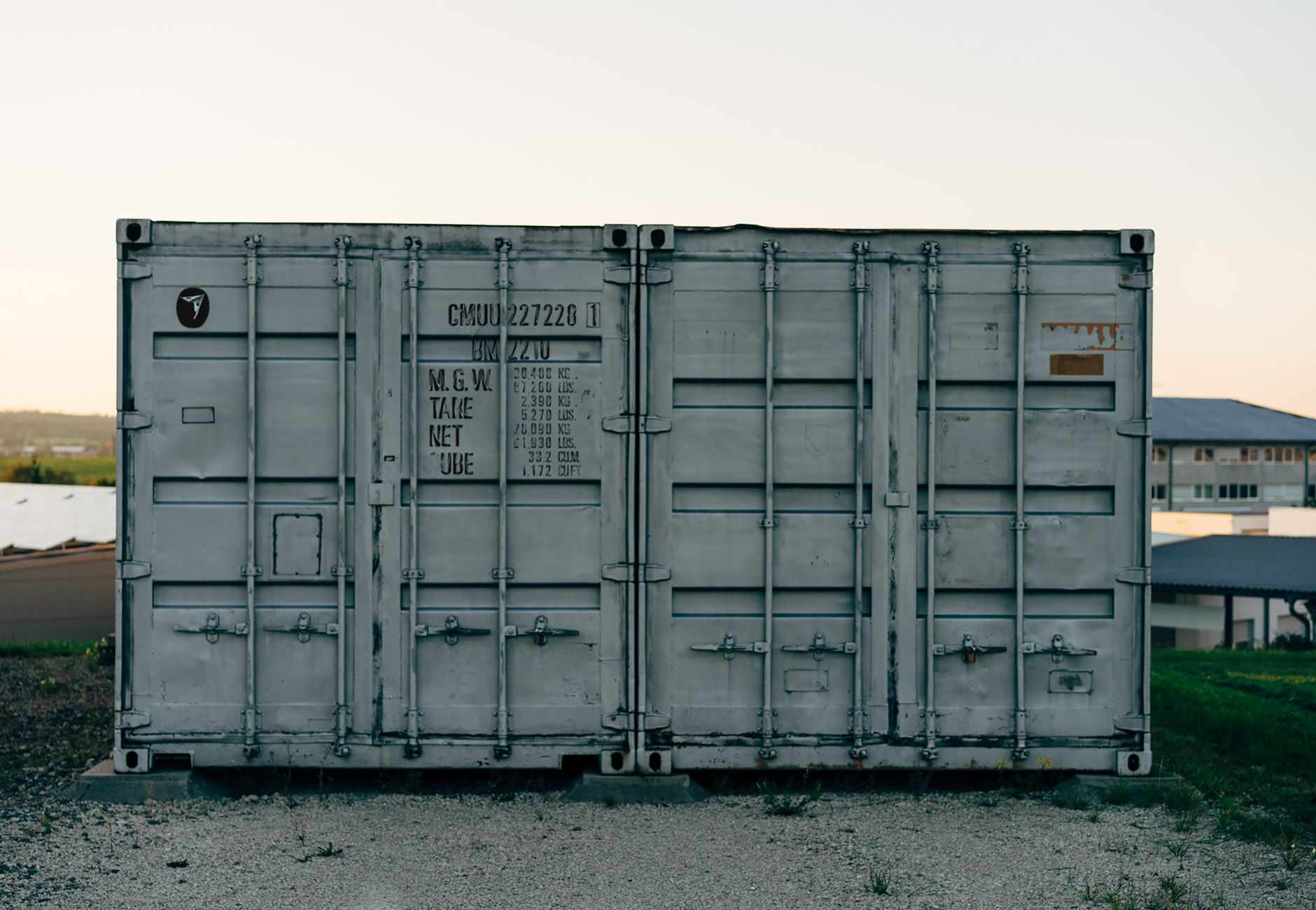 Photo by Markus Winkler on Pexels.
Jamming is not a future threat. It's Tuesday. Russian EW systems in Ukraine have disrupted commercial UAS operations consistently enough that Ukrainian operators cycle through frequencies, platforms, and operating altitudes the way a mechanic cycles through tools. NATO exercises are reflecting the same reality. Any drone system that assumes clean spectrum is a system designed for a threat environment that no longer exists.
So where does that leave containerized drone systems, platforms built to deploy fast, operate autonomously, and sustain operations without constant human input?
The answer depends entirely on how the communications stack inside that container was designed.
The Single-Link Problem
Most commercial drone-in-a-box deployments are built around a single uplink path: LTE, a proprietary RF datalink, or a direct satellite connection. That works fine for pipeline inspection or perimeter security at a fixed industrial site. It does not work when a sophisticated adversary has mobile jamming assets and knows your operational frequency.
The failure mode is predictable. Jam the link, the drone either loiters in place, returns to home, or falls out of the sky, depending on how the failsafe was configured. None of those outcomes are acceptable during a combat ISR tasking or a forward resupply run.
What's needed instead is a layered communications approach baked into the container itself, not bolted on after the fact.
How the Better Systems Are Built
Containerized platforms that operate in contested environments typically stack multiple comm paths, with onboard logic to switch between them based on signal quality and mission phase. A workable layered setup looks something like this:
graph TD
    A[Drone in Flight] --> B{Comms Manager}
    B --> C[Primary: Encrypted RF Datalink]
    B --> D[Secondary: SATCOM BLOS]
    B --> E[Tertiary: Mesh Node Relay]
    C --> F[Container Ground Station]
    D --> F
    E --> F
    F --> G[Operator / Autonomous Mission Logic]
The comms manager isn't a human flipping switches, it's software running on the edge compute node inside the container, making handoff decisions faster than any operator could. When primary RF degrades past a set threshold, the system transitions to SATCOM. If SATCOM latency spikes beyond what the mission profile allows, it routes through a mesh relay node the container may have deployed ahead of the mission.
None of this is exotic. What makes it work in a containerized context is that the ground-side radio equipment, the processing node, and the power conditioning are all co-located in a single hardened enclosure, no field-expedient cable runs, no separate generator, no second team needed to set up the antenna farm.
Emission Control Is Also a Feature
There's another side to contested comms that doesn't get enough attention: EMCON, emission control. Sometimes the right move isn't to maintain a link at all.
Well-designed autonomous container systems can execute pre-loaded mission profiles with zero uplink during flight. The drone launches, follows its tasking, collects data, and returns. The container downloads the payload on landing. No RF emissions during the mission window means no signal for an adversary to home in on.
This is operationally significant. Passive ISR runs, where the platform collects without transmitting, are far harder to detect and counter than continuous-link operations. The container stores the mission data locally until a secure exfil window opens. That might be a burst transmission over an encrypted SATCOM link during a low-probability-of-intercept window, or a physical data transfer when the container is recovered.
The Integration Tax Nobody Talks About
Here's the part that frustrates acquisition teams: layered comms done right is expensive up front. The radios, the software-defined networking stack, the SATCOM terminal, the hardened enclosure to protect all of it, none of that is cheap.
But compare that cost against the alternative. A single-link system that fails when it matters costs the price of the platform plus the price of the mission failure. In military contexts, mission failure has consequences that don't appear on any budget line.
Containerized systems that treat communications redundancy as a first-order design requirement, not an afterthought, are more expensive on the spec sheet and dramatically cheaper in the field. That's not an opinion. That's what operators report after they've had a single-link system jammed on an actual tasking.
The container is the easy part. Getting the comms right is where the work is.
Get Drone in a Package in your inbox
New posts delivered directly. No spam.
No spam. Unsubscribe anytime.